
The calves are the most neglected muscle group in the gym and one of the most useful. Stronger calves mean a more explosive sprint, a more stable knee, less risk of Achilles trouble, and — if vanity is a motivator — visible definition that finishes off the leg. The catch is that calves respond differently from almost every other muscle. They handle huge amounts of slow daily load (every step you take), so to actually grow and strengthen them you need more volume, more frequency, and a fuller range of motion than most people use. This guide breaks down the anatomy, the four calf raise variations that matter, the exact rep ranges and tempos that work, and a six-week routine that produces real results.
Quick Hit
Calf raises grow best with full range of motion, a one-to-two-second pause at the top, and two to four sessions per week. Most lifters do too few reps too quickly — 12 to 20 controlled reps per set, with a deep stretch at the bottom, is the sweet spot.
What the calves actually are
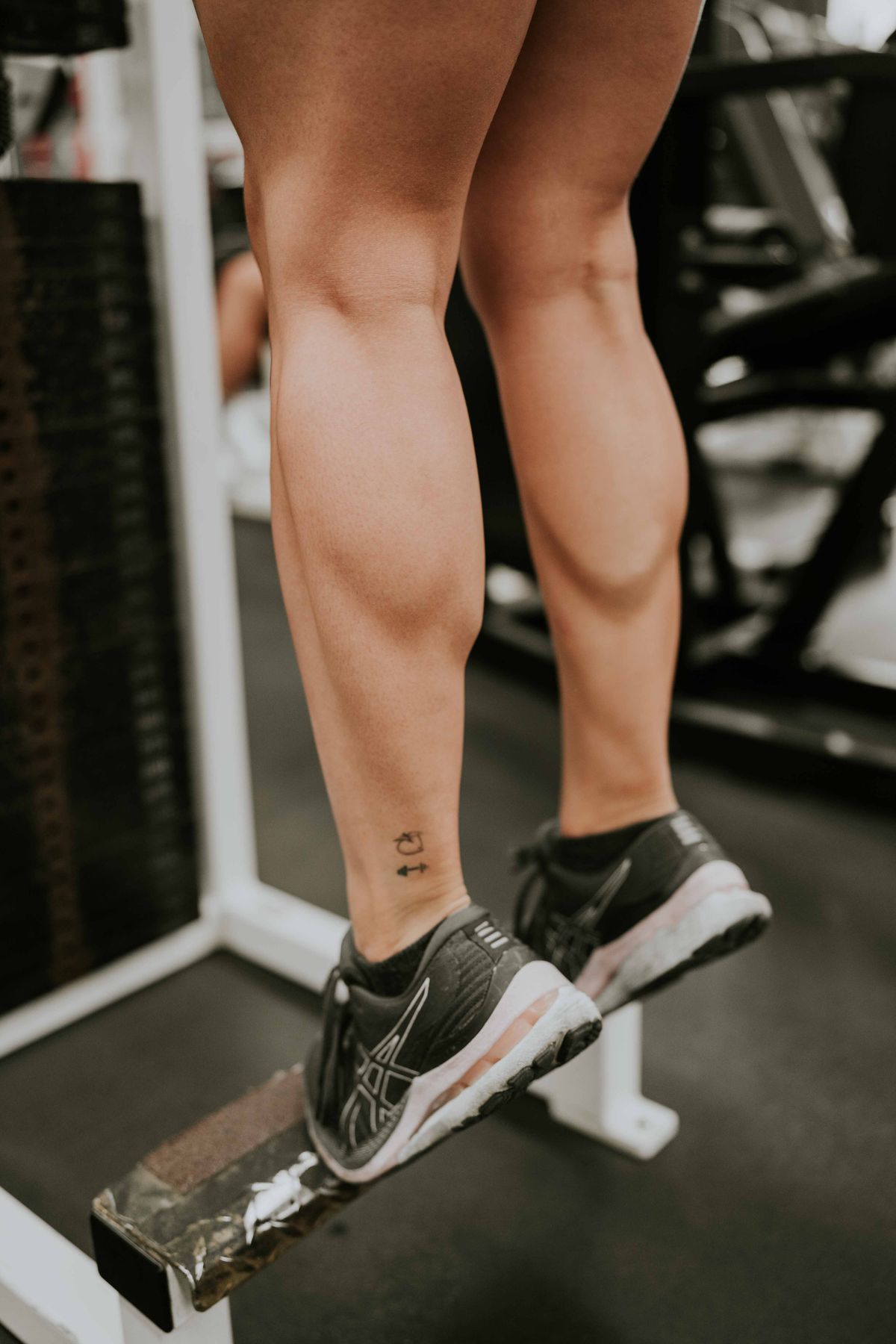
What people call “the calf” is really two muscles working together: the gastrocnemius and the soleus. The gastrocnemius is the larger, more visible muscle that gives the calf its diamond shape; it crosses both the knee and the ankle and is biased toward fast, powerful contractions. The soleus sits underneath, doesn’t cross the knee, and is biased toward slow, endurance-heavy work — it’s the muscle keeping you upright when you stand all day.
Because they have different fiber profiles, they grow best with different approaches. The gastrocnemius likes heavier load and moderate reps with the knee straight. The soleus likes lighter load and higher reps with the knee bent. Train both, in those positions, and you cover the whole calf.
Why most people’s calves don’t grow
Three reasons, all fixable. First: too short a range of motion. Calf raises done on flat ground rob you of the bottom-half stretch that drives most of the growth signal. Second: too fast a tempo. Bouncing through reps uses the Achilles tendon’s elasticity instead of the muscle itself. Third: too little volume. The calves are conditioned by tens of thousands of low-load daily contractions, so a few sets of 8 reps once a week barely registers.
Fix those three things — full range, controlled tempo, more frequency — and stubborn calves start changing within four to six weeks.
The four calf raise variations that matter
1. Standing calf raise (gastrocnemius focus)
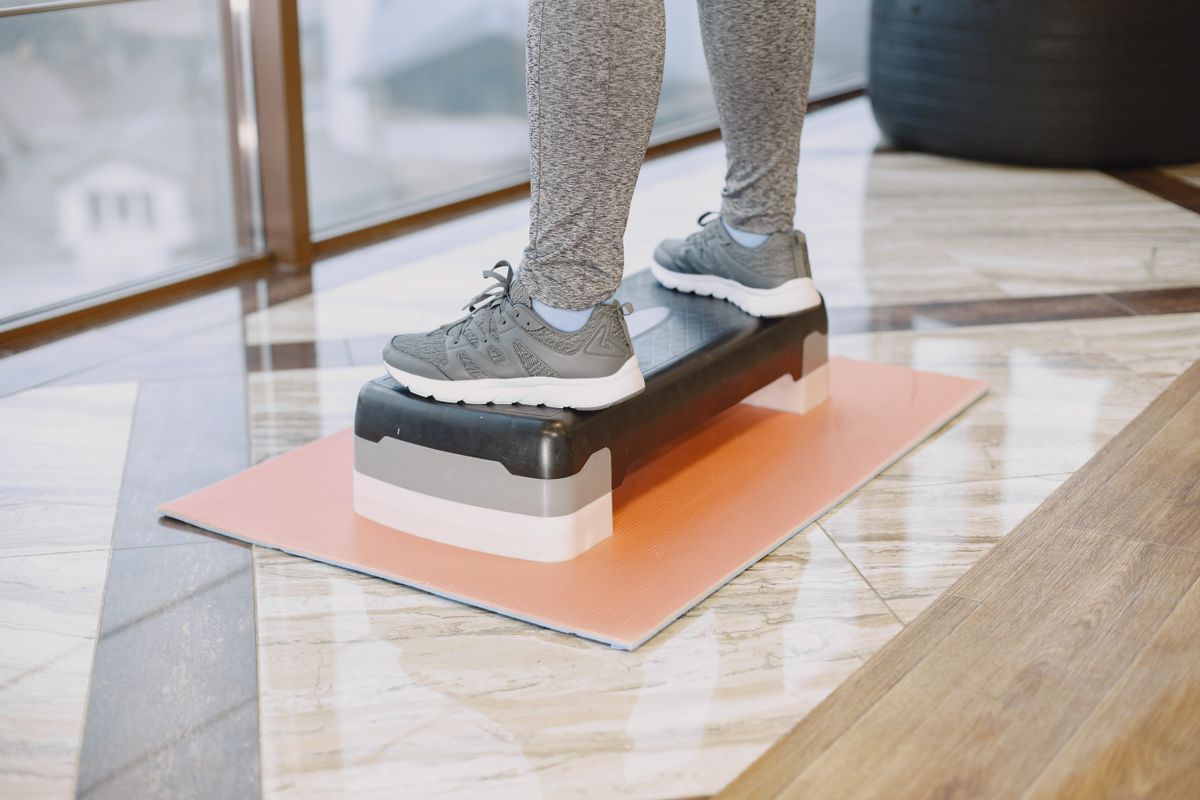
The classic. Stand with the balls of your feet on a step, heels hanging off the back. Hold a dumbbell in one hand for balance (or both, or load a barbell across your back for heavier work). Rise up onto your toes as high as you can, pause one full second at the top while squeezing the calves, then lower slowly until your heels drop noticeably below the step.
Rep range: 12 to 20 per set. Sets: 3 to 5. Knee stays straight (but not locked) throughout. This is the bread-and-butter calf builder.
2. Seated calf raise (soleus focus)
Sit on a bench with the balls of your feet on a small platform (a 25-pound plate works) and rest a dumbbell or barbell across the tops of your knees. Knees are bent at roughly 90 degrees — this position takes the gastrocnemius mostly out of the equation and shifts the work to the soleus.
Rep range: 15 to 25 per set. Sets: 3 to 4. Higher reps, slower tempo. The soleus is endurance-oriented and responds best to that.
3. Single-leg calf raise
Same setup as the standing version but on one leg at a time. The single-leg version doubles the load on the working calf without needing extra weight and lets you address any side-to-side imbalances. Most people are noticeably weaker on their non-dominant side.
Rep range: 10 to 15 per side. Sets: 3 to 4 per leg. Useful as the primary calf movement when traveling or when no heavy equipment is available.
4. Donkey calf raise
An old-school bodybuilder favorite. Bend over at the hips so your torso is parallel to the floor, hands resting on a bench. The balls of your feet are on a step. From this position the calves get loaded through an even greater stretch and the gastrocnemius gets recruited heavily. Have a partner sit on your lower back, or wear a weighted vest.
Rep range: 15 to 20. Sets: 3. Most useful as a finisher after standing work.
The technique details that change everything
Range of motion is non-negotiable
Stand on a flat floor and do a calf raise — you can rise maybe four inches off the ground. Stand on a step with heels off the back and do the same movement — you get nearly double that range. The bottom half of the rep, where the heel drops below the step and the calf is fully stretched, is where the most muscle-building tension happens. Skipping it cuts your results in roughly half.
The pause at the top
Hold the contracted position for a full one to two seconds at the top of every rep. This eliminates the tendon-bounce effect and forces the calf muscle itself to do the work. It also dramatically increases time under tension without needing more weight.
Slow the lowering phase
Take two to three seconds to lower your heels from the top of the rep to the deep stretch at the bottom. The eccentric (lowering) phase is where most muscle damage and growth signaling happens. Calves take a lot of slow eccentric work to respond.
Don’t roll the ankles
The foot should rise and lower in a straight line, with weight distributed evenly across the ball of the foot. Rolling outward (onto the pinky-toe side) or inward (onto the big-toe side) at the top wastes the contraction and stresses the ankle.
Toe Position Detail
The old advice to “point toes in for outer calf, toes out for inner calf” is mostly fiction. Studies on calf head activation show minor differences at best. Pick a comfortable, neutral foot position and focus on range and tempo instead.
How much weight, how many reps, how often
The calves aren’t going to grow from 3 sets of 8 done once a week. They need more volume than any other muscle group in your routine.
Volume targets
10 to 16 total weekly sets for the calves, split across two to four sessions, is the working dose for most lifters trying to make real progress. That’s higher than the standard for biceps or shoulders, and it’s deliberate — the calves can handle more.
Rep range
12 to 25 per set, depending on variation. Lower end (12 to 15) for heavier standing work. Higher end (20 to 25) for seated soleus work. The point of failure should feel like a deep burn, not like the bar is too heavy to move.
Frequency
Two to four times a week. The calves recover fast because they’re conditioned for high daily load. Lifting two days in a row is fine. If you can only fit calves into your routine twice a week, do longer sessions; if four times, shorter ones.

A six-week calf raise routine
Weeks 1–2: Build the base
Three sessions a week. Each session: standing calf raise 4 sets x 15 reps, seated calf raise 3 sets x 20 reps. Focus on perfecting tempo and range. Use a moderate weight — leave 2 to 3 reps in the tank on the last set.
Weeks 3–4: Add load
Same structure, add weight on the standing version. Push the last set close to failure. Add donkey calf raises 2 sets x 15 reps as a finisher on two of the three weekly sessions.
Weeks 5–6: Intensify
Four sessions a week. Two heavier sessions (standing + donkey) and two lighter (single-leg + seated). Add a dropset on the last set of standing raises in week 6 — go to failure, drop the weight by 30%, immediately do as many reps as possible.
By the end of six weeks, most lifters can see visible thickening of the calves and feel noticeably more spring during sprints, jumps, or hill climbs.
Mistakes that stall calf development
Skipping the seated version
If you only do standing calf raises, you’re leaving the entire soleus undertrained. The soleus is responsible for a huge portion of total calf volume — neglecting it caps how much your lower leg can ever grow.
Treating it as an afterthought
Three sets at the end of leg day, half-energy, isn’t going to do it. Treat calves as their own movement worth 8 to 10 working sets per session, not a throwaway finisher.
Bouncing the reps
The single most common mistake. Bouncing through the bottom of the rep lets the Achilles tendon’s elasticity do the work and dramatically reduces growth signaling. Slow, controlled, with a deep stretch.
Skipping single-leg work
If you only train calves bilaterally (both feet at once), strength imbalances develop and the stronger side compensates. Single-leg variations expose and correct that.
Not eating enough
The calves are still skeletal muscle and still need a calorie surplus and adequate protein to grow. If you’re in a cut, expect to maintain rather than build calf size — the same as any other muscle group.
Bodyweight calf raise progression (no equipment)
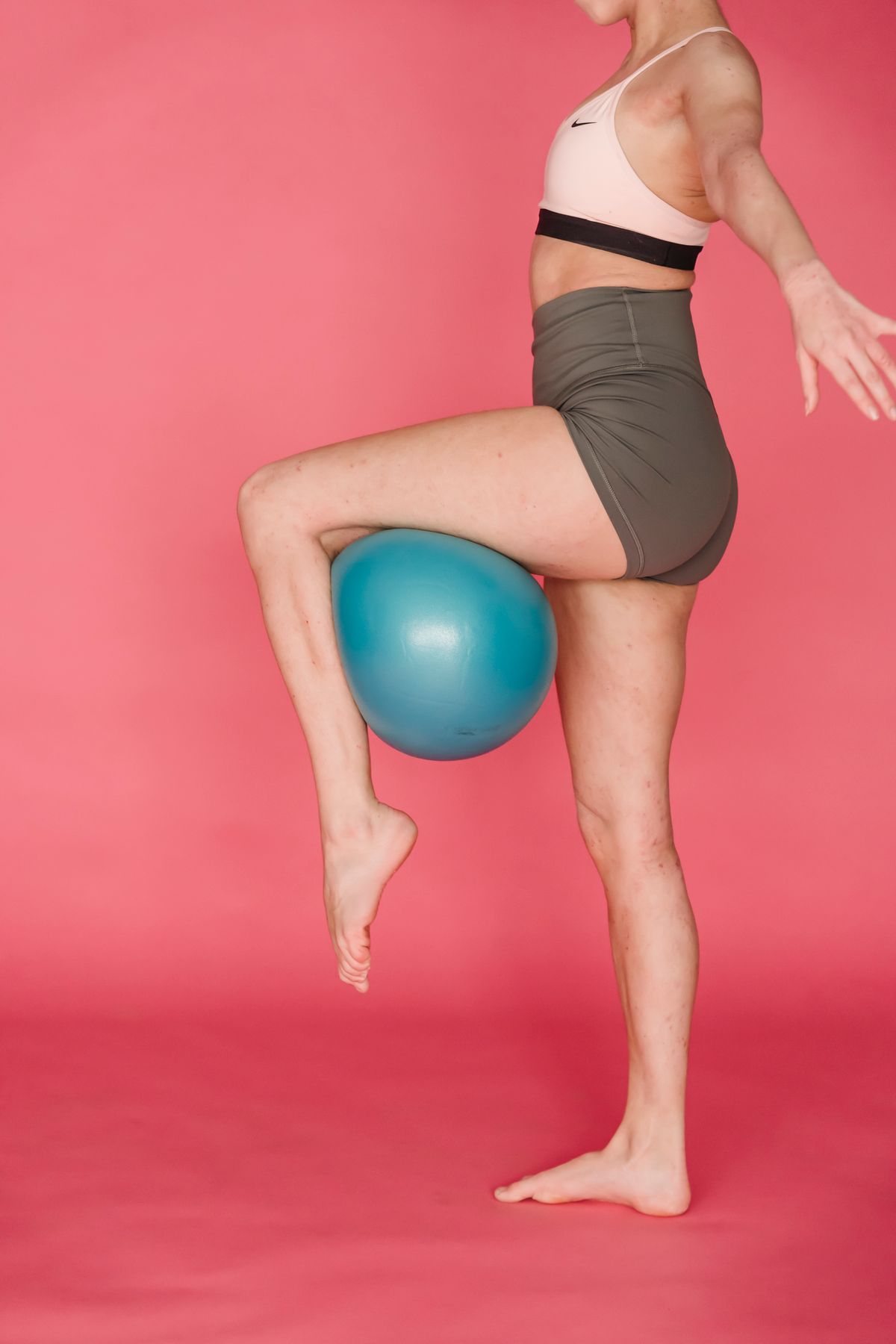
If you don’t have access to a gym, the calves can still grow with bodyweight alone — they just need huge volume.
Phase 1: Build endurance
Standing single-leg calf raise on a step, 3 sets x 20 reps per leg. Done three times a week. Range and tempo are the priority.
Phase 2: Add load
Same setup, but hold a backpack loaded with books or a heavy bag in the same-side hand as the working leg. 3 sets x 15 reps per leg. Three times a week.
Phase 3: Add intensity
Single-leg calf raises with full pause at the top and a 3-second eccentric. Drop the rep count to 10–12 per side and aim for failure. Add explosive jumping calf raises (3 sets x 10) on a different day for power development.
For more bodyweight workout structures, see our fitness workout archive.
The walking-and-running connection
Stronger calves don’t just look better — they directly improve your running and walking efficiency. The calves act as a spring during the push-off phase of each stride, storing and releasing elastic energy through the Achilles tendon. Stronger calves mean more force per step, less Achilles strain, and faster split times.
Marathon runners who incorporate dedicated calf raise work two or three times a week typically see drops in injury rate and improvements in running economy within a training cycle. The same principle applies to anyone who walks a lot — stronger calves mean less fatigue at the end of a long day on your feet.
Calf Raise FAQ
How many calf raises should I do per day?
If you’re training calves on dedicated workout days, 60 to 80 total quality reps per session (split across 3 to 5 sets) two to four times a week is plenty. Daily calf raises with low volume (like 30 reps a day at home) work for general health and maintenance but won’t drive serious size gains.
Can I do calf raises every day?
Yes — calves recover fast. Daily training works as long as one of the sessions each week pushes near failure. The bigger limiter isn’t recovery, it’s whether you can keep the form quality high enough day after day to actually drive growth.
Will calf raises make my calves bigger?
Yes, if you train them with enough volume, frequency, range of motion, and progressive load. The reason most people’s calves “won’t grow” is rarely genetics — it’s usually one of those four factors being missing. Genetics affect the ceiling, not whether you can grow at all.
Should I do calf raises with bent knees or straight legs?
Both. Straight-leg (standing) calf raises emphasize the gastrocnemius. Bent-knee (seated) calf raises emphasize the soleus. A complete calf routine includes both positions.
How long does it take to see calf gains?
Visible changes typically take 6 to 12 weeks of consistent, well-programmed training. Strength gains happen faster — most lifters notice they can handle more weight within the first 3 weeks. Size lags behind because calves are stubborn and need accumulated volume.
Do calf raises help with running?
Yes, significantly. Stronger calves improve running economy, reduce Achilles injury risk, and produce more force per stride. Runners typically benefit from 2 to 3 dedicated calf sessions per week alongside their running.
Are calf raises safe for the knees?
Yes — calf raises load the ankle and lower leg, not the knee. They’re one of the few lower-body exercises that can be done safely even with significant knee issues. The seated version is particularly knee-friendly because the load sits on top of the thigh rather than on the back or shoulders.
Why do my calves cramp during calf raises?
Usually a combination of dehydration, low electrolyte intake (magnesium and potassium are the common culprits), and undertraining suddenly being pushed hard. Drink water before the session, eat something with potassium (a banana works), and build volume gradually.
Keep going
Calves grow when you treat them seriously — full range, controlled tempo, real volume, multiple sessions a week. Pair the standing and seated versions, push the range, and the results follow. Browse more workout guides on EatFitFuel to round out your lower-body program.
Related on EatFitFuel