
The glutes are the largest, most powerful muscle group in the human body — and the most neglected in nearly every training program. They drive sprinting, jumping, lifting, climbing stairs, and getting out of a chair. They stabilize the hips and protect the lower back. When they’re strong, your knees track better, your runs feel easier, and your squat depth opens up. When they’re weak — which is true for most adults — every other muscle has to pick up the slack, which is how you end up with chronic back pain, cranky knees, and a deadlift that won’t budge. This is a complete pillar guide to glute training: the anatomy, the 18 most effective exercises, how to structure a program, the critical technique details that change everything, and a 12-week routine designed to add real size and strength.
Quick Hit
The glutes grow best with a combination of heavy compound movements (squats, deadlifts, hip thrusts) and high-rep isolation work (kickbacks, abductions, single-leg variations). Train them 2-3 times per week with 12-20 working sets total. Most people need to dramatically increase volume to see results.
Glute anatomy 101
“The glutes” is shorthand for three distinct muscles working together. Each has its own role, its own fiber profile, and its own preferred exercises. Train all three, you build a strong, balanced, athletic backside. Train only one — usually the gluteus maximus, which is what most “glute workouts” emphasize — and you leave half the muscle group on the table.
Gluteus maximus
The big one — the largest single muscle in the body. Responsible for hip extension (pushing the hip forward), external rotation, and a lot of force production in sprints, jumps, and heavy lifts. Best trained with hip thrusts, deadlifts, squats, and any movement that loads the hip through extension under heavy weight.
Gluteus medius
The fan-shaped muscle on the side of the hip. Critical for hip abduction (moving the leg out to the side) and single-leg stability. A weak medius is the single most common cause of knee valgus (knees collapsing inward) during squats and lunges, and it’s a major contributor to runner’s knee. Best trained with side-lying clams, hip abductions, single-leg work, and lateral band walks.
Gluteus minimus
Sits underneath the medius and does similar work — hip abduction and stabilization. Most exercises that hit the medius also hit the minimus. Rarely needs dedicated work if you’re covering medius properly.
Why most people’s glutes are weak
Three reasons. First, sitting. When you sit for ten hours a day, the glutes are in a stretched, inactive position and the brain literally turns down the recruitment signal. This is called “gluteal amnesia” by some sports scientists — the muscles forget how to fire. Second, hip flexor dominance. Tight hip flexors (also from sitting) reciprocally inhibit the glutes. Third, undertraining. Most strength programs include squats and call it a day. Squats train the glutes, but not nearly as much as people think — the quads do most of the work in most squat patterns.
The fix is direct, dedicated glute training with the right exercises, frequency, and volume. Most people who add real glute work to their routine see meaningful changes within 6-8 weeks.
The 18 most effective glute exercises
Compound foundations (do these first)
1. Barbell hip thrust
The single most effective gluteus maximus exercise ever measured. Lean your upper back against a bench, roll a barbell across your hips (use a pad), plant your feet flat on the floor shoulder-width apart. Drive your hips up by squeezing the glutes, pause at the top with a fully extended hip, then lower with control.
The key cue: drive through the heels, finish with a hard glute squeeze at the top, and don’t hyperextend the lower back. Reps: 8-12 for heavy strength, 12-20 for hypertrophy.
2. Romanian deadlift
The classic posterior chain builder. Hold a barbell or dumbbells in front of you, hinge at the hips with a slight knee bend, push the hips back, and lower the weight along your legs until you feel a strong stretch in the hamstrings and glutes. Drive the hips forward to return.
The RDL trains the glutes through their stretched position, which research shows produces more hypertrophy than work in the shortened position alone. Reps: 8-10 for strength, 10-15 for hypertrophy.
3. Conventional deadlift
Stand with feet hip-width apart, barbell over mid-foot. Hinge down to grip the bar, brace, and stand up by driving the hips forward and the floor away. The conventional deadlift is one of the highest total-tonnage glute movements available — a heavy deadlift session can move more weight through the glutes than five sets of squats.
4. Bulgarian split squat
Place your back foot on a bench behind you, front foot a long stride forward. Lower straight down by bending the front knee, keeping your torso slightly forward to emphasize the glutes. Stand back up by driving through the front heel.
This is one of the highest-EMG glute exercises in the entire literature — often higher than back squats — and it’s brutally honest about side-to-side imbalances. Reps: 8-12 per leg.
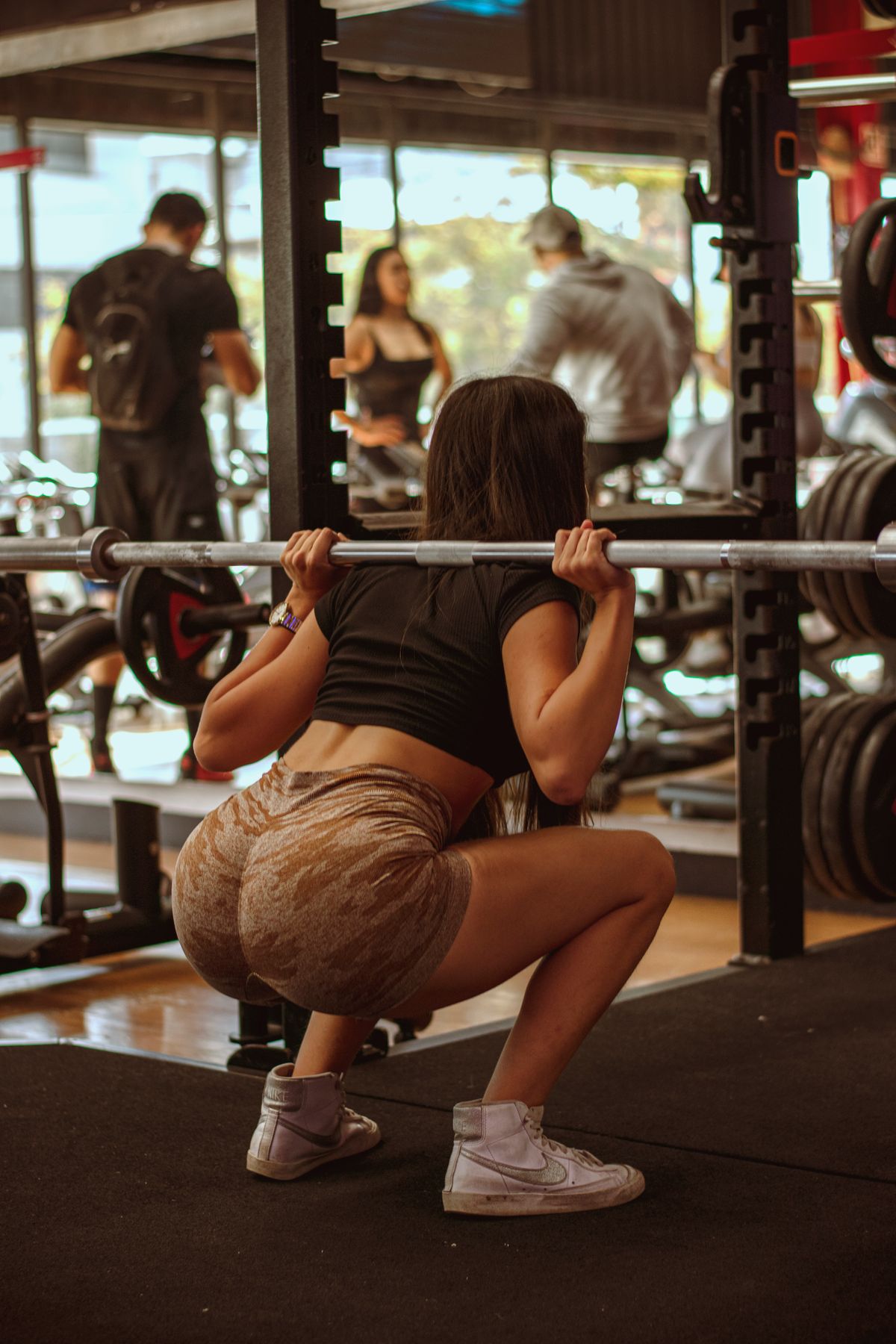
5. Back squat (with quality depth)
The classic. Barbell across the upper back, feet shoulder-width or slightly wider, sit back and down until your hip crease is below your knee crease, then drive up. Squats hit the glutes hard only if you reach real depth and drive up through the heels rather than the toes. A high-bar squat with full depth and a forceful hip drive at the top trains the glutes; a shallow quarter-squat barely touches them.
6. Front-foot-elevated split squat
Stand with your front foot on a 4-inch platform (a plate or aerobic step), back foot on the floor in a long stride behind you. The elevation deepens the front-leg range of motion and lets you load the glutes through a longer pathway. Reps: 8-12 per leg.
Hip-dominant accessories
7. Single-leg hip thrust
Same setup as the barbell hip thrust but on one leg, with the other leg extended straight in front. No weight needed at first — bodyweight is plenty challenging. Targets each glute individually and exposes imbalances. Reps: 10-15 per leg.
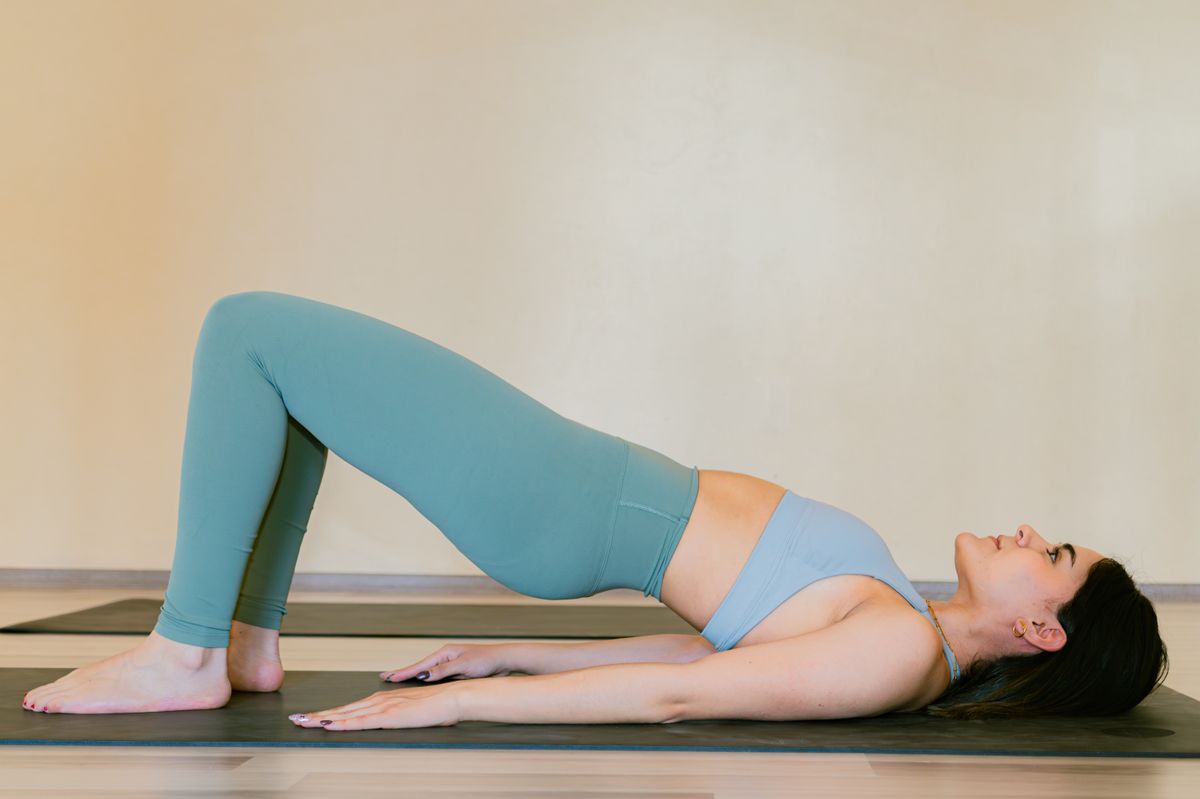
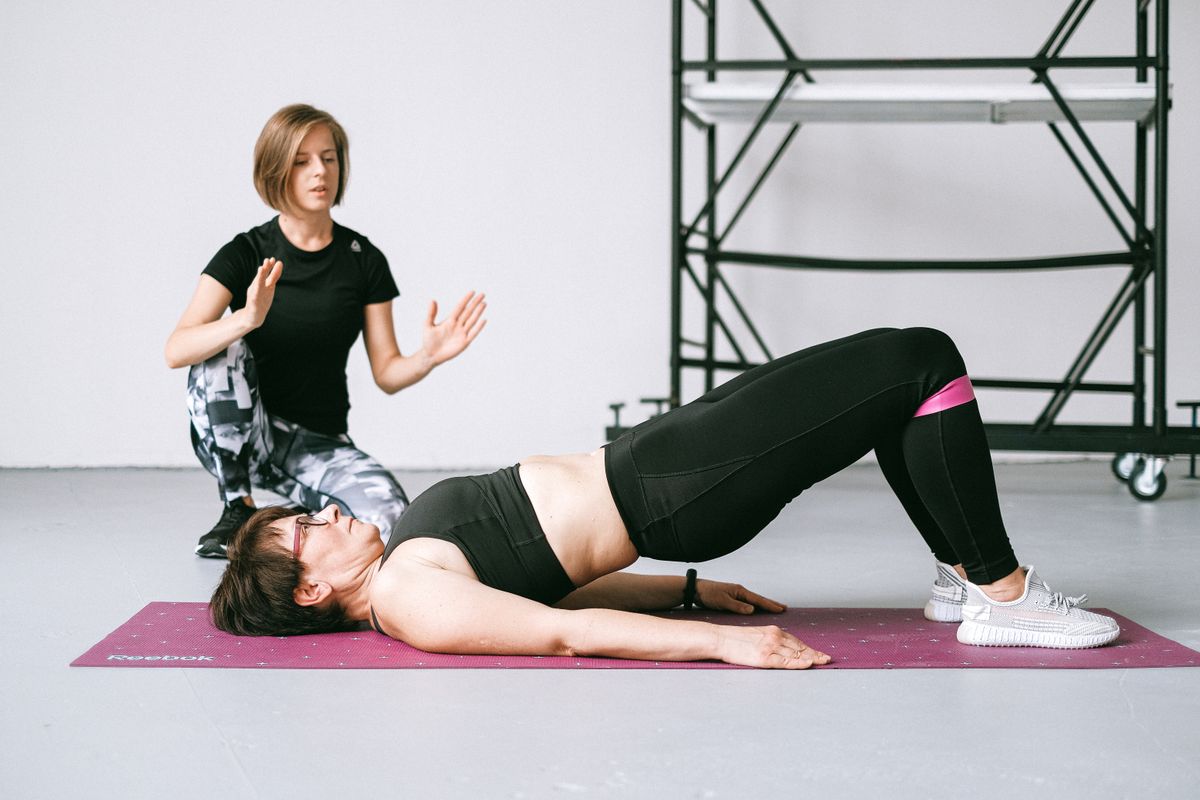
8. Glute bridge
The hip thrust’s regression — lie flat on your back with knees bent and feet flat. Drive the hips up, squeeze the glutes at the top, lower. Great for activation before heavier work, or as a high-rep finisher. Reps: 15-25.
9. Hip thrust march
Hold the top of a glute bridge position and slowly march the knees up one at a time. The single-leg stability demand fires the glutes hard while the support leg works overtime. Reps: 20-30 alternating marches.
10. Cable pull-through
Set a low cable pulley with a rope attachment. Face away from the stack, grip the rope between your legs, step forward to create tension, then hinge at the hips like an RDL. Drive the hips forward to return. The cable provides constant tension that free-weight RDLs don’t. Reps: 12-15.
Lateral and stabilizer work (gluteus medius)
11. Side-lying clamshell
Lie on your side with knees bent at 90°, hips stacked. Keeping feet together, open the top knee like a clam shell — squeezing the upper glute. Lower with control. Looks easy, isn’t if done right. Reps: 15-20 per side.
12. Banded lateral walks
Loop a resistance band around your thighs just above the knees. Drop into a quarter squat. Step laterally with one foot, then bring the other in to maintain tension on the band. Keep the band taut throughout. Reps: 15-20 steps each direction.
13. Standing cable hip abduction
Attach an ankle strap to a low cable pulley. Stand sideways to the stack with the cable on your outside leg. Hold a support for balance and lift the working leg out to the side against the cable resistance. Reps: 12-15 per leg.
14. Single-leg glute bridge with abduction
Set up in a glute bridge position, then extend one leg out at a 45° angle from your body while holding the bridge. The supporting leg’s gluteus medius lights up while the maximus holds the bridge. Reps: 12-15 per side.
Isolation work and finishers
15. Cable kickback
Ankle strap to a low cable. Face the stack, support yourself with both hands. Kick the working leg back and up, squeezing the glute at the top. Slow, controlled, no momentum. Reps: 12-15 per leg.
16. Quadruped donkey kick
On hands and knees. Keeping the working knee bent at 90°, drive the heel up toward the ceiling, squeezing the glute. The bent-knee position takes the hamstring out of the equation and isolates the glute. Reps: 15-20 per leg.
17. Fire hydrant
On hands and knees, with knees bent at 90°. Lift one knee out to the side, keeping the bend. Targets the gluteus medius and external rotators. Reps: 15-20 per side.
18. Bird dog hip extension
On hands and knees. Extend the opposite arm and leg simultaneously, squeezing the glute on the extended leg. Focus on the glute squeeze, not the height of the extension. Reps: 10-12 per side.
How to structure a glute workout
A well-built glute session moves from heaviest to lightest, from compound to isolation. Here’s the order that consistently produces results:
Phase 1: Activation (5 minutes)
Wake the glutes up before you ask them to do heavy work. Two rounds of: glute bridge x 15, side-lying clamshell x 10 per side, banded lateral walk x 10 each direction. This sounds optional. It isn’t. Skipping activation is why most people’s heavy hip thrusts feel like they’re being done by the quads and lower back.
Phase 2: Heavy compound (15-20 minutes)
One main compound lift. Hip thrust, Romanian deadlift, Bulgarian split squat, or back squat with proper depth. 4 sets of 6-10 reps with real weight, leaving 1-2 reps in the tank on the last set.
Phase 3: Secondary compound (10-15 minutes)
A different compound from a different angle. If you started with hip thrusts, do single-leg work next (split squats, lunges, single-leg RDLs). If you started with Bulgarian split squats, do hip thrusts. 3 sets of 8-12 reps.
Phase 4: Isolation pump (10 minutes)
Higher-rep, lower-load work to maximize blood flow and tension on the glutes specifically. Cable kickbacks, fire hydrants, banded glute bridges, or hip thrust marches. 3 sets of 15-25 reps.
Phase 5: Optional finisher (5 minutes)
A burnout sequence — banded glute bridges to failure, or a 60-second hip thrust hold at the top — leaves the glutes flat and triggers additional growth signaling.
The Mind-Muscle Cue
During every glute exercise, consciously focus on squeezing the glutes as hard as possible at the contracted position. Research on internal vs. external attention shows mind-muscle focus increases muscle activation by 10-20% in trained lifters. For the glutes — historically slow to fire — this is huge.
How often to train glutes
The glutes recover relatively fast and respond well to high frequency. Most people see best results with 2-3 dedicated glute sessions per week, with about 48 hours between heavy sessions to allow for recovery.
The 2-day-a-week split
One heavier session (hip thrust + RDL + Bulgarian split squats), one lighter session (single-leg work + isolation + bands). About 12-16 working sets per week total.
The 3-day-a-week split
Session A: Heavy compound (hip thrust focus, 4 sets x 8 reps + RDL 3 sets x 8 reps + 2 sets isolation).
Session B: Single-leg focus (Bulgarian split squats + walking lunges + single-leg hip thrusts + abduction).
Session C: Pump/medius (cable kickbacks + clamshells + banded work + glute bridges).
Total: 18-22 working sets per week. This is the sweet spot for most people serious about glute growth.
If you only have one day
Make it count. Pick one heavy compound (hip thrusts or Bulgarian split squats), one secondary compound (Romanian deadlift), two isolation moves (cable kickback + abduction), and a high-rep finisher. About 14-16 total sets in a single 60-minute session.
A 12-week glute growth program
Weeks 1-4: Build the base
Two sessions per week. Focus is form, activation patterns, and building tendons up to handle heavier work later.
Session A: Glute bridge 3×15, Hip thrust 3×12, RDL 3×10, Banded lateral walks 3×15 each side, Clamshells 2×15 each side.
Session B: Goblet squat 3×12, Bulgarian split squat 3×10 each leg, Single-leg glute bridge 3×12 each, Cable kickback 3×15 each leg.
Weeks 5-8: Add load
Three sessions per week. Add weight progressively to the main lifts. Push the heavy compound sets to within 2 reps of failure.
Session A (heavy): Hip thrust 4×8 (heavier), Romanian deadlift 4×8, Walking lunge 3×10 each, Fire hydrant 2×20 each.
Session B (single-leg): Bulgarian split squat 4×8 each, Single-leg hip thrust 3×12 each, Step-up 3×10 each, Banded lateral walks 3×15.
Session C (pump): Cable pull-through 4×12, Cable kickback 4×12 each, Hip thrust march 3×20, Banded glute bridge to failure x 2.
Weeks 9-12: Intensify
Same three-session structure with progressive overload, plus add intensity techniques on the last set of the main lift.
Week 9-10: Add a dropset on the last hip thrust set (heavy x 6, drop 30%, x AMRAP).
Week 11-12: Add a rest-pause on the final compound: 1 set x AMRAP, 15 second rest, AMRAP, 15 sec rest, AMRAP.
Most lifters see noticeable visual changes and significant strength gains by the end of the 12 weeks. The glutes respond particularly well to this progression because frequency, volume, and intensity are all being managed together.
Mistakes that stall glute growth
Doing only squats
Squats are a great quad exercise that incidentally trains the glutes. If your primary glute training is squat-based, you’re undertraining the actual gluteus maximus by a wide margin. Add hip thrusts as a primary movement immediately.
Skipping the activation
The pre-work glute activation routine isn’t optional warm-up filler — it’s the difference between heavy hip thrusts going to the glutes vs. the lower back. Five minutes of bridges, clams, and band walks before every glute session.
Ignoring the medius
Most lifters train the maximus and forget the medius. This produces a shape problem (a flat, low backside instead of a full, lifted one) and a function problem (poor single-leg stability, knees that cave in on squats). Dedicate sets to medius every session.
Bouncing the hip thrust
Coming off the floor with momentum to bounce up rather than driving up under control wastes the entire bottom range. Pause briefly at the bottom of every rep, then drive up explosively.
Not eating enough
The glutes are large muscles and they need fuel to grow. If you’re in a calorie deficit, expect to maintain at best. For real glute growth, aim for a small surplus (200-300 calories above maintenance) with at least 0.8g of protein per pound of bodyweight.
Quitting too early
The glutes are slow to grow visibly because they’re already large. Real changes take 8-12 weeks of consistent, well-programmed work. Lifters who give up at week 4 because “nothing is happening” miss the window where the work actually starts paying off.
Bodyweight glute workouts (no equipment)
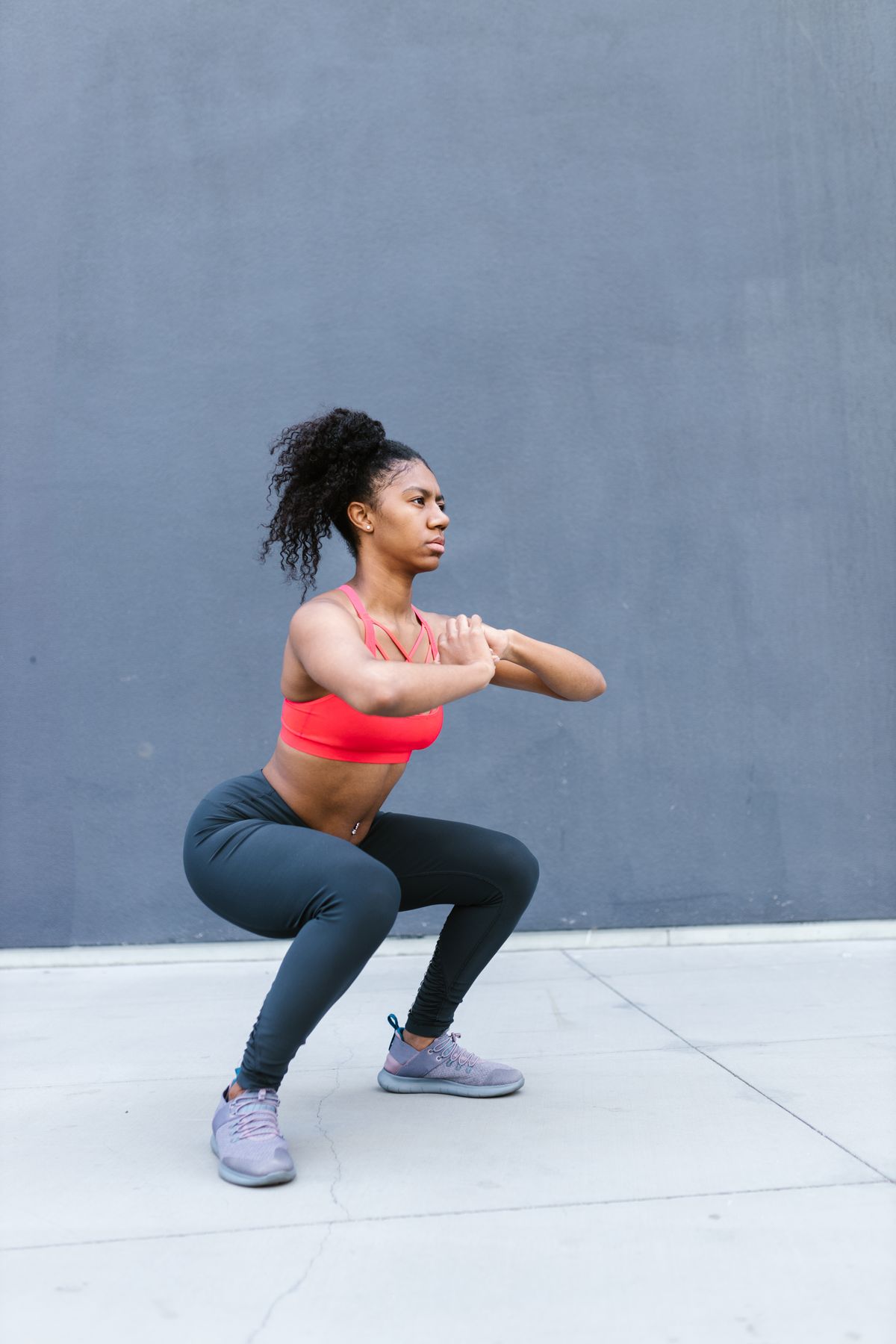
Strong glutes are absolutely possible without a gym. The keys: more reps, more time under tension, and more frequency than you’d use with weights.
Beginner bodyweight routine (3x/week)
Glute bridge 3×20 with 2-second pause at top, Single-leg glute bridge 3×12 each, Reverse lunge 3×10 each leg, Donkey kick 3×15 each, Clamshell 3×15 each side, Side plank with leg lift 3×10 each.
Intermediate bodyweight routine (3x/week)
Single-leg hip thrust 3×12 each (feet elevated on couch for harder version), Bulgarian split squat 3×10 each leg, Walking lunge 3×20 steps total, Side-lying hip abduction 3×15 each side, Plank with leg lift 3×12 each side, Glute bridge hold 60 seconds x 2.
For a complementary lower-body routine, see our complete calf raises guide, our hamstring stretching guide, and our hip flexor stretch routine — strong glutes depend on mobile hips and balanced lower-body strength.
The strength + stretch combination
Glute training is most effective when paired with hip mobility work. Tight hip flexors actively suppress glute activation through reciprocal inhibition — when the front of your hip is short and active, the back of your hip stays quiet. The fix is daily hip flexor stretching combined with the glute strengthening work above.
A 5-minute hip mobility routine before glute training (couch stretch + 90/90 hip rotation + hip flexor lunge) noticeably improves how strongly the glutes fire during the actual workout. Pair this with the strength program and gains accelerate.
Why strong glutes matter beyond aesthetics
Lower back protection
Weak glutes force the lumbar erectors and hamstrings to do hip extension work they’re not designed for. Over time this creates chronic lower back tightness and increases injury risk during lifting and athletic movements. Stronger glutes shift the load to where it belongs.
Knee health
Particularly the gluteus medius. A weak medius lets the femur internally rotate during squats, lunges, and running, which collapses the knee inward (valgus). This is one of the leading mechanical causes of patellofemoral pain (runner’s knee) and ACL injury risk. Strong medius keeps the knees tracking properly.
Sprinting and jumping power
The glutes are the prime mover for hip extension, which is the engine for sprinting, jumping, and most explosive athletic movements. Stronger glutes mean faster sprints, higher jumps, and more powerful lifts — even if you’re not an athlete, this translates to easier hill climbs, faster stair-running, and more confidence carrying groceries up a flight.
Posture and pelvic position
Weak glutes contribute to anterior pelvic tilt — the postural pattern where the pelvis tips forward, the lower back arches, and the belly pushes out. Strengthening the glutes pulls the pelvis back into neutral and improves overall standing posture.
Glute Exercises FAQ
What’s the single best exercise for glutes?
The barbell hip thrust. Multiple EMG studies show it produces the highest gluteus maximus activation of any exercise, and it loads the glutes in their fully shortened position — which is where they need the most stimulation. If you only have time for one glute exercise per week, make it hip thrusts.
How often should I train glutes?
2-3 times per week for most people. Glutes recover relatively fast, so higher frequency works well as long as you’re getting at least 48 hours between heavy sessions. Daily glute work isn’t necessary and can cut into recovery from other lower-body training.
Can you grow glutes with bodyweight only?
Yes, but you need higher volume and progressive variations (single-leg, elevated feet, longer time under tension) to keep providing growth stimulus once basic bodyweight exercises get easy. Beginners and intermediates see substantial gains from bodyweight work; advanced lifters need weights to keep progressing.
How long does it take to see glute growth?
Visible changes typically take 8-12 weeks of consistent, well-programmed training with adequate nutrition. Strength gains come faster (3-4 weeks). The glutes are large muscles that grow slowly but steadily — patience and consistency matter more than program perfection.
Do squats grow your glutes?
Squats train the glutes, but not as much as people assume. The gluteal contribution to a back squat is real but secondary to the quads. To meaningfully grow the glutes with squats, you need full depth (hip crease below knee crease), proper hip drive at the top, and ideally a slightly wider stance with toes turned out. Even then, hip thrusts and RDLs train the glutes more directly.
What’s the difference between glute training for men and women?
Mechanically, nothing. The exercises that build glutes in women build glutes in men. The differences are in volume, frequency, and program emphasis based on individual goals — women looking specifically to build glute size often train glutes 3 days a week with high volume; men using glute training as part of overall strength work often integrate it into 1-2 days a week alongside other compound lifts.
Why don’t I feel my glutes during exercises?
Usually one of three reasons: (1) chronic glute inhibition from sitting + tight hip flexors — fix with daily hip flexor stretching plus pre-workout activation, (2) you’re letting other muscles dominate (back overuse in hip thrusts, quads in squats) — focus on the mind-muscle connection and slower tempos, (3) the exercise simply isn’t a strong glute-builder for you — try a different variation, like switching from back squats to hip thrusts.
Should I do glute training on leg day or its own day?
Either works. Glutes-on-leg-day is more time-efficient but can suffer when the rest of the leg work has already exhausted you. Dedicated glute days produce better quality work but require more weekly training time. For most people, leg-day glute work twice a week + one dedicated glute-pump session = the best results.
Can glute exercises help with lower back pain?
Often, yes. Many cases of chronic lower back tightness are caused by weak glutes forcing the lumbar erectors to do extra hip extension work. Building glute strength shifts the load away from the lower back. That said, sharp or radiating back pain warrants a professional assessment — don’t assume strengthening will fix it.
Are resistance bands enough for glute training?
For beginners and intermediates: yes, especially when combined with bodyweight progressions. Bands are excellent for the medius (lateral walks, monster walks, banded clamshells) and decent for the maximus (banded hip thrusts, banded glute bridges). For advanced lifters chasing maximum size and strength, bands work great as a finisher or activation tool but aren’t a full substitute for heavy compound work.
What’s the best glute exercise for the gluteus medius?
Single-leg hip thrusts and banded lateral walks tie for first place. Both load the medius through its primary function (stabilizing the pelvis during single-leg loading) without much help from the maximus. Side-lying clamshells and standing cable abductions are excellent secondary choices.
How much weight should I hip thrust?
The general benchmark for an intermediate lifter is hip thrusting roughly 1.5x their bodyweight for sets of 10. Advanced lifters can work up to 2-2.5x bodyweight. The progression is what matters more than the absolute number — week-over-week, are you adding reps or weight to the main lift? If yes, you’re on the right path.
Pulling it all together
Strong, well-developed glutes are a function of three things: training the right exercises (hip thrust, RDL, Bulgarian split squat as foundations; medius work as a constant supplement), training them often enough (2-3 times per week with 12-20 working sets), and giving them the nutrition and recovery to actually grow. None of those three is optional.
If you’ve been training for months without seeing glute changes, audit those three variables before changing anything else. Are you hip thrusting heavy weight for real sets? Are you training glutes more than once a week? Are you eating enough? Fix whichever of those is the weak link and the gains follow.
Pair this glute program with our hip flexor stretching routine for hip mobility, hamstring stretches for posterior chain balance, and plank training for core stability — the package builds a lower body that performs, looks athletic, and stays injury-free for the long run.
Keep going
The glutes are the engine of the lower body — train them seriously and the rest of your training and movement transforms. Browse more workout guides on EatFitFuel to build out a complete program.