
Healthy dessert is one of those phrases that sounds like a contradiction until you taste a frozen banana chocolate truffle or a tahini-date brownie and realize the only thing wrong with traditional desserts is the assumption that they need to be a sugar bomb wrapped in butter. The recipes below are real desserts — sweet, satisfying, the kind you’d serve to company — but they get their richness from whole-food ingredients instead of cups of refined sugar and shortening. None of them require obscure shopping trips. All of them are genuinely good.
Quick Hit
A dessert can be both nutritionally dense and delicious if you build it around real fat (avocado, nuts, full-fat dairy), real sweetness (dates, banana, maple), and real flavor (vanilla, cocoa, citrus, sea salt). What you remove is mostly the white sugar.
What makes a dessert “healthy”
There’s no single definition, but a workable one is this: a dessert whose ingredients contribute something nutritionally — fiber, protein, healthy fats, micronutrients — while still tasting like a treat. The bar isn’t “rabbit food.” It’s “you’d happily eat this without anyone forcing you to.”
In practical terms, that usually means swapping refined sugar for whole-food sweeteners (dates, ripe banana, maple syrup, honey), replacing all-purpose flour with almond or oat or chickpea flour, and using nuts, seeds, or full-fat dairy for richness instead of butter and heavy cream by the cupful. The texture and flavor stay; the nutritional profile changes meaningfully.
1. Frozen banana “nice cream”
The original gateway healthy dessert and still one of the best. Two frozen ripe bananas, blended in a food processor with a splash of milk, become an absurdly creamy soft-serve in about 90 seconds.
The chocolate version: add 2 tablespoons cocoa powder and a teaspoon of vanilla. The peanut butter version: 2 tablespoons peanut butter. The strawberry version: half a cup of frozen strawberries. Each one is essentially sugar-free apart from the natural fructose in the fruit, and each one tastes like real ice cream.
The technique that matters
The bananas have to be very ripe — the brown-spotted ones you’d otherwise throw out are perfect. Peel them, break them into chunks, and freeze for at least four hours. A food processor works better than a blender for this; less liquid needed, creamier final texture. Scrape down the sides twice. Eat immediately for the soft-serve effect, or transfer to a container and freeze 30 minutes for scoopable.
2. Dark chocolate avocado mousse
Avocado in chocolate sounds wrong and tastes spectacular. The flesh is silky enough that, when blended with cocoa and a little sweetener, it produces a mousse texture that’s nearly identical to one made with three sticks of butter and a dozen eggs.
The base recipe: one ripe avocado, ¼ cup cocoa powder, ¼ cup maple syrup, 2 tablespoons milk of choice, 1 teaspoon vanilla, a pinch of sea salt. Blend until totally smooth. Chill 30 minutes. Top with raspberries.
The avocado contributes monounsaturated fats and around 10 grams of fiber per fruit. You taste the chocolate, not the avocado. Skeptics get converted at the first spoonful.
3. Date-and-tahini caramels
A two-ingredient dessert that hits the candy-craving center of the brain like a hammer. Slice Medjool dates lengthwise, remove the pit, fill the cavity with a teaspoon of tahini, sprinkle flaky sea salt across the top. Done.
The dates bring concentrated natural sweetness and around 7 grams of fiber per fruit. The tahini contributes calcium, iron, and a bitter-savory edge that prevents the whole thing from being cloying. The salt makes it taste like a salted caramel.
For a more elaborate version, dip the filled dates in melted dark chocolate (70% or higher) and let them set. Two of those after dinner replaces a whole bag of caramels.
4. Black bean brownies
Don’t skip this one because of the name. Black bean brownies are dense, fudgy, intensely chocolate, and would pass at any potluck without anyone clocking the swap.
One can of black beans (rinsed and drained), 3 eggs, ¼ cup melted coconut oil, ⅔ cup cocoa powder, ½ cup maple syrup, 1 teaspoon vanilla, 1 teaspoon baking powder, a pinch of salt. Blend in a food processor until totally smooth. Fold in ⅓ cup chocolate chips. Bake at 350°F in a parchment-lined 8×8 pan for 25–28 minutes.
The beans add ~7 grams of fiber and ~6 grams of plant protein per square. The eggs bind. The coconut oil and cocoa do the brownie heavy lifting. They’re noticeably richer than flour-based brownies and last longer in the fridge.
5. Yogurt bark with berries and nuts
The visual equivalent of opening a chocolate bar, but with Greek yogurt as the base. Line a sheet pan with parchment. Spread two cups of full-fat Greek yogurt (sweetened with a tablespoon of honey and ½ teaspoon vanilla) in a quarter-inch layer. Press berries, chopped nuts, mini chocolate chips, and a sprinkle of seeds into the surface. Freeze 4 hours. Break into shards.
Each serving lands around 8 grams of protein from the yogurt plus the antioxidants in the berries. It tastes like frozen yogurt without the artificial dairy stabilizers and gum products of store-bought versions. For variations on this approach, see our Greek yogurt guide.
6. Chia seed pudding
The dessert that doubles as breakfast. Three tablespoons chia seeds, one cup milk (any kind), one tablespoon maple syrup, and ½ teaspoon vanilla. Whisk well, wait five minutes, whisk again to break up clumps. Refrigerate overnight.
The chia seeds absorb the liquid and form a tapioca-like texture. Top with fresh berries, sliced banana, granola, or shaved dark chocolate. Each serving delivers around 10 grams of fiber and 4–5 grams of plant omega-3s.
For chocolate chia pudding, add 2 tablespoons cocoa powder to the base. For matcha, add a teaspoon of ceremonial matcha. Tropical version: use coconut milk and top with mango.
7. Baked apples with cinnamon and oats
An old-school dessert that’s been hiding in plain sight. Core four apples (Honeycrisp or Granny Smith). Fill each cavity with a tablespoon of rolled oats, a teaspoon of maple syrup, a generous pinch of cinnamon, and a few chopped walnuts. Add a quarter inch of water to the bottom of the baking dish. Bake at 375°F for 35–40 minutes.
The apples soften into something between fruit and pie filling. The oats absorb the syrup and the apple juice and form a crumble in each cavity. A scoop of Greek yogurt on top in place of ice cream is the move.
8. Peanut butter protein cookies
Three ingredients, ten minutes, no flour. One cup natural peanut butter, ⅔ cup coconut sugar (or brown sugar), one egg. Mix, scoop into 12 mounds on a parchment-lined sheet, press with a fork, bake at 350°F for 9–11 minutes. Let cool completely on the pan — they firm up as they cool.
Add a scoop of vanilla protein powder for an extra 4–5 grams of protein per cookie. The peanut butter provides fat and protein, the egg binds, and the coconut sugar (which has a lower glycemic index than white sugar) brings the sweetness. They’re chewy on day one and crisp by day three.
9. Berry crisp with almond flour topping
A summer dessert that uses no white flour and almost no added sugar — the berries do most of the heavy lifting. Toss four cups of mixed berries (fresh or frozen) with the juice of half a lemon and a tablespoon of cornstarch. Pour into a buttered baking dish.
For the topping: one cup almond flour, ½ cup rolled oats, ¼ cup chopped pecans, ¼ cup melted coconut oil, ¼ cup maple syrup, ½ teaspoon cinnamon. Crumble over the berries. Bake at 350°F for 40 minutes.
The almond flour gives a nutty, shortbread-like topping without any wheat. The oats add chew. The berries bubble up around the edges. Best served warm with a spoonful of Greek yogurt or coconut whipped cream.
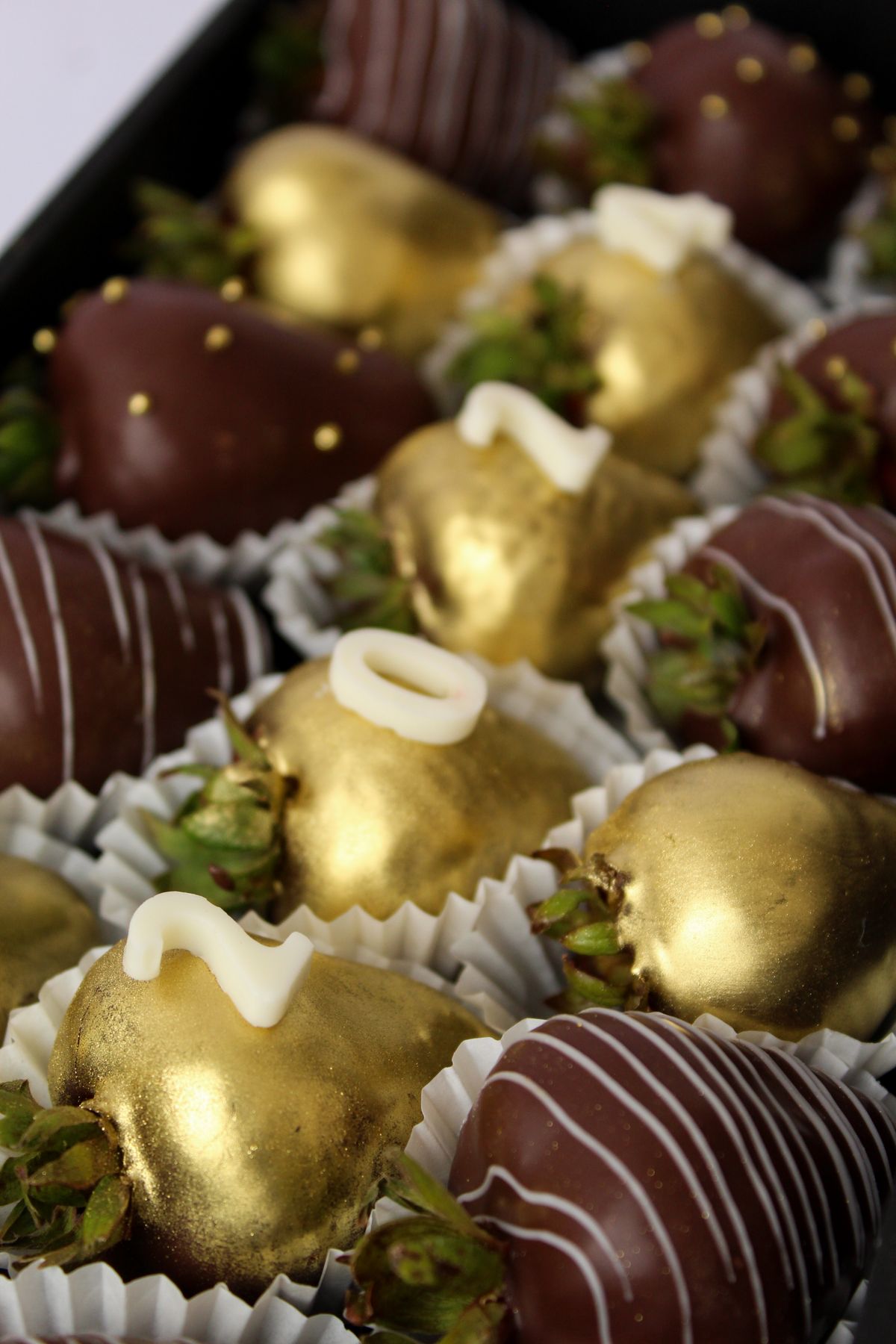
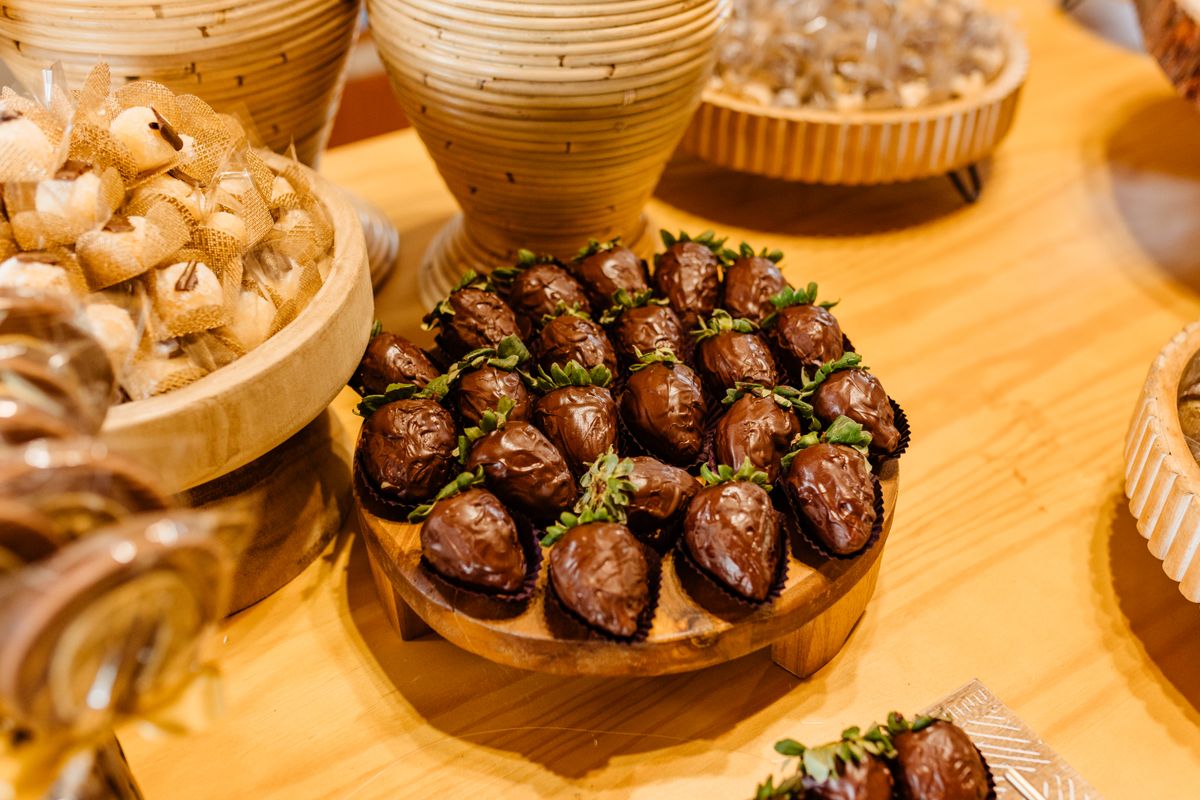
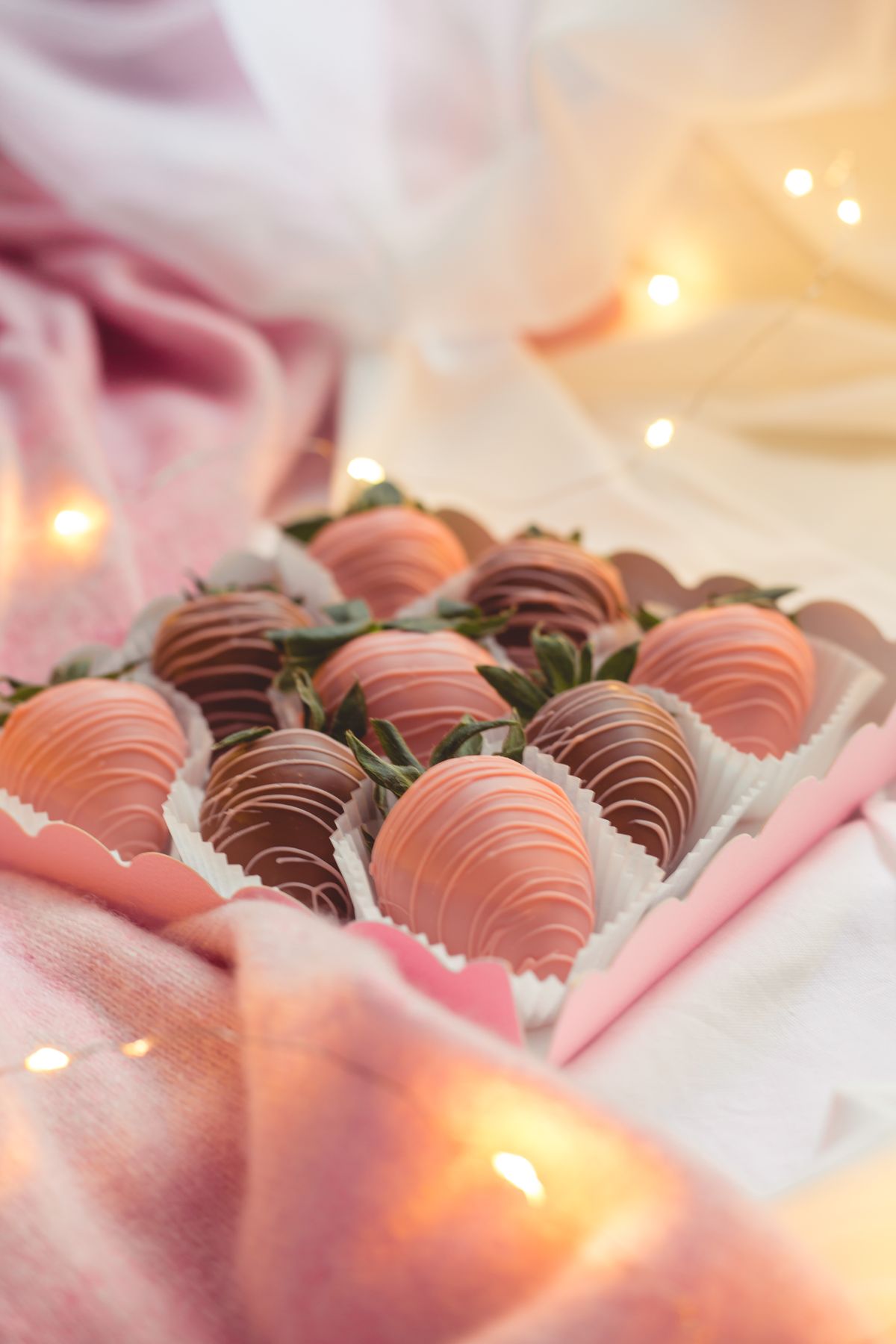
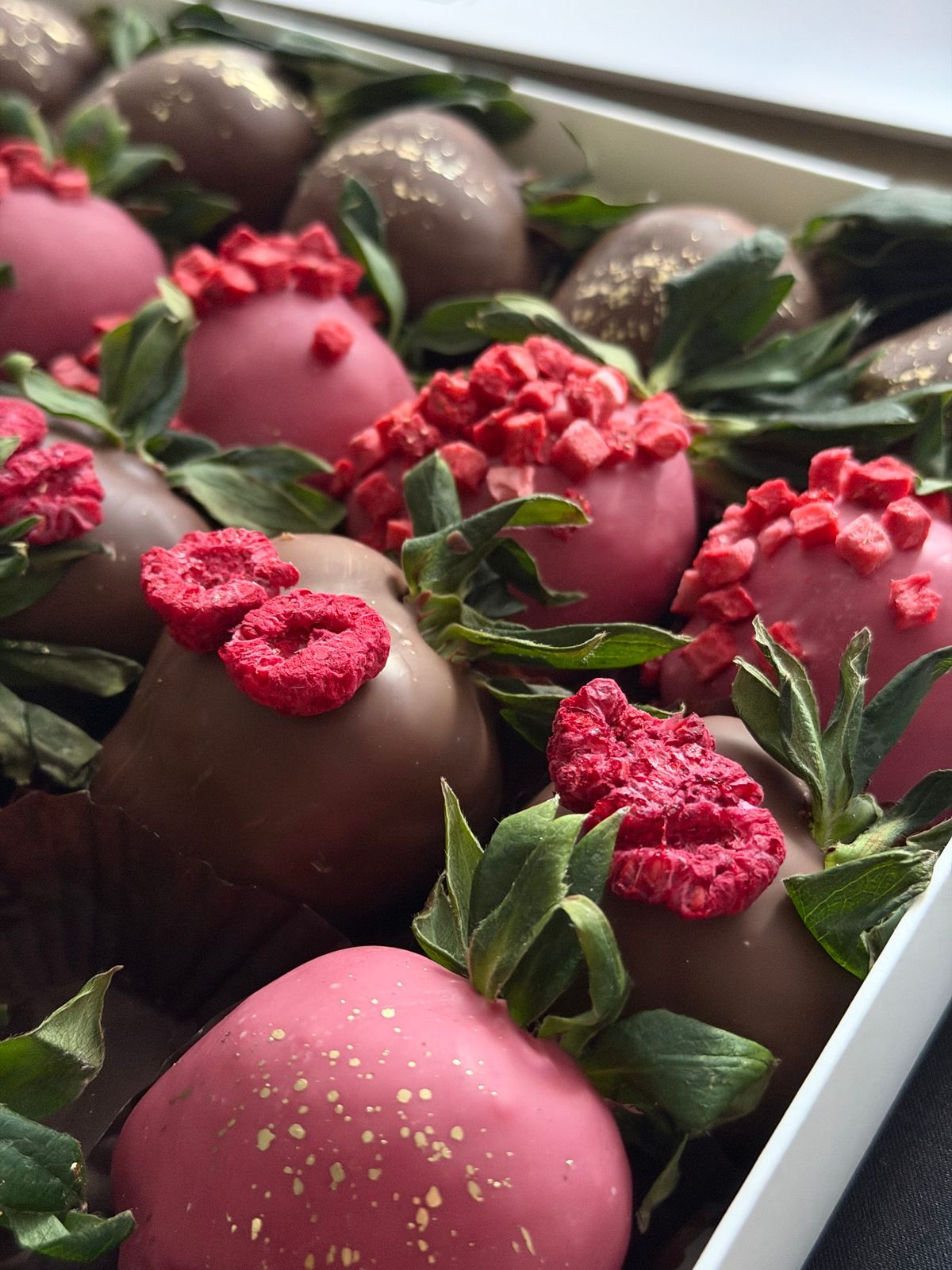
10. Dark chocolate-covered strawberries
Two ingredients. Melt 6 ounces of 70%+ dark chocolate over a double boiler or in the microwave at 30-second intervals. Dip cleaned, fully dry strawberries into the chocolate to coat. Place on parchment. Refrigerate 15 minutes to set.
Don’t skip the “fully dry” part — water on the strawberries seizes the chocolate. Pat with a paper towel and let them sit on a rack for ten minutes before dipping.
A 70% dark chocolate has less than half the sugar of milk chocolate by weight and significantly more flavanols. Six chocolate-covered strawberries hit around 200 calories total — the same as a single fast-food cookie, and an actual nutritional contribution.
11. Coconut macaroons
Naturally flour-free, naturally dairy-free if you skip the chocolate dip, and embarrassingly easy. Two cups unsweetened shredded coconut, two egg whites, ⅓ cup maple syrup, ½ teaspoon vanilla, pinch of salt. Mix, scoop into tablespoon-sized mounds, bake at 325°F for 15–18 minutes until the tops are golden.
Optional: dip the bottoms in melted dark chocolate after they’ve cooled. The cookies are chewy in the center, crisp on the outside, and naturally low in carbohydrates per cookie compared to flour-based versions.
12. Pumpkin pie energy bites
One cup pitted Medjool dates, ½ cup pumpkin puree, 1 cup rolled oats, ½ cup almond butter, 1 teaspoon pumpkin pie spice, ¼ teaspoon salt. Process in a food processor until everything comes together into a dough. Roll into 16 balls. Refrigerate to firm up.
They taste like pumpkin pie filling that learned to be portable. Each one is about 100 calories with 2 grams of fiber and 2 grams of protein. They keep for two weeks in the fridge and four months in the freezer.
Common substitutions and how they work
Maple syrup → honey
Roughly 1:1 swap with a slightly different flavor. Honey is a touch sweeter, so reduce by a tablespoon if you’re sensitive to sweetness levels.
Almond flour → oat flour
Generally 1:1, but oat flour absorbs slightly more liquid. If your batter looks dry, add a tablespoon of milk. Almond flour is denser and richer; oat flour is lighter and slightly sweeter.
Coconut oil → butter
Either works, depending on dietary preference. Coconut oil at room temperature in a baked good gives a similar mouthfeel to softened butter. Melted, they’re essentially interchangeable in volume.
Greek yogurt → labneh or skyr
All three work for the yogurt bark and as toppings. Skyr is the thickest, labneh is the most tangy, Greek yogurt is the most accessible. Use what you can find.
Why “healthy dessert” still has limits
A few honest notes. These desserts have fewer empty calories than traditional baking, but they’re still calorie-dense. Six chocolate-covered strawberries is a real dessert; eight cookies is still eight cookies. Portion still matters.
Also, “natural sweetener” isn’t a free pass. Maple syrup and honey hit the body very similarly to sugar metabolically once consumed — they just bring trace minerals along for the ride. They’re better than refined sugar, not metabolically inert.
Finally, food allergies. Many of these recipes lean on nuts, eggs, or dairy. Cross-reference with your needs before swapping in for a regular dessert.
Healthy Dessert FAQ
What’s the healthiest dessert option overall?
Fresh fruit is the obvious answer, but among prepared desserts, anything built on whole-food bases (avocado, dates, beans, nuts, full-fat Greek yogurt) with minimal added sugar is the strongest category. Frozen banana nice cream, dark chocolate avocado mousse, and chia seed pudding are three of the most nutrient-dense options on this list.
Can I have dessert every day and still be healthy?
Yes, if portion sizes are reasonable and the dessert contributes something nutritionally. A bowl of berries with Greek yogurt and a square of dark chocolate every night is genuinely fine for most adults. A pint of ice cream every night isn’t, regardless of branding.
Are dates really better than sugar?
The sugar in dates is fructose and glucose, similar to other sweeteners. The difference is the fiber, polyphenols, and minerals they bring with them. The fiber slows the glucose hit. Eating two dates is meaningfully different from eating two teaspoons of sugar — same sweet, more nutrition, slower absorption.
Can I make these desserts without a food processor?
Yes, but a few are easier with one. Black bean brownies and avocado mousse really benefit from the smooth blend a processor or high-powered blender gives. The rest — nice cream, energy bites, baked apples, crisp — work with a regular bowl and spoon or a basic blender.
How do I store these desserts?
Most keep 3–5 days refrigerated in airtight containers. Energy bites, brownies, and macaroons freeze well for up to three months. Frozen banana nice cream and yogurt bark need to live in the freezer; soften 5 minutes before serving.
Are these desserts kid-friendly?
Most of them, very much so. Frozen banana nice cream, chocolate-covered strawberries, baked apples, yogurt bark, and energy bites are reliable kid hits. Black bean brownies tend to pass without comment unless you announce the bean part.
Can these recipes be made vegan?
Many already are. The yogurt bark can use coconut yogurt. The brownies can swap eggs for flax eggs. The macaroons can use aquafaba in place of egg whites. The mousse, nice cream, energy bites, and date-tahini caramels are vegan as written.
What dessert satisfies a chocolate craving without the sugar crash?
Dark chocolate avocado mousse, a couple of date-tahini caramels dipped in 70% chocolate, or chocolate chia pudding. All three deliver real chocolate flavor with fat and fiber that slow the glycemic hit and prevent the crash that follows a sugar-only treat.
Keep going
Build a small repertoire of three or four of these and you stop reaching for the candy aisle. Browse more recipes on EatFitFuel for everyday-cooking ideas to round out your kitchen rotation.
Related on EatFitFuel