
If you sit for a living, your hip flexors are almost certainly tight. They’re the deep muscles at the front of your hips that pull your thigh toward your torso — and they shorten and stiffen anytime you spend hours folded into a chair. That stiffness shows up as a chronic lower-back pull, hips that feel locked when you try to squat, glutes that won’t fire on runs, and a vague sense of being older than you actually are. The good news: you can fix it. The right hip flexor stretches done four or five times a week make a real, visible difference in how your hips move within about three weeks. Here’s how to do them properly.
Quick Hit
The most effective hip flexor stretch is the half-kneeling position with a posterior pelvic tilt — squeezing the glute on the kneeling side until you feel the front of your hip lengthen. Hold 30–60 seconds per side, two or three rounds, daily.
What the hip flexors actually are
“Hip flexors” is shorthand for a group of muscles that work together to bring your thigh up toward your chest. The two biggest players are the iliacus and psoas major, which together are called the iliopsoas. Add in the rectus femoris (the top of the quad), tensor fasciae latae (TFL), sartorius, and pectineus, and you’ve got the full crew.
The psoas is the standout. It starts on the lumbar spine, runs through the pelvis, and attaches on the inside of the femur. That route means a tight psoas can pull directly on the lower back, which is why hip flexor tightness so often shows up as back pain instead of hip pain.
Why hip flexors get tight
Sitting is the obvious culprit. When you sit, your hips are in flexion — the angle between your thigh and torso is around 90 degrees. Spend eight to ten hours a day in that position and the iliopsoas adapts by shortening. It’s not a defect; it’s the muscle doing exactly what muscles do when they’re held in a shortened position for long stretches.
The second culprit is repetitive flexion-heavy training without offsetting work. Lots of cycling, lots of running, lots of sit-ups — all dose the hip flexors hard without ever pulling them back to full length. The third is a weak glute and posterior chain, because when the back side of the body underperforms, the front side compensates and over-shortens.
Signs you actually need this work
Lower-back stiffness in the morning. Pain or pinching in the front of the hip when you squat below parallel. Glutes that don’t seem to “fire” during hip thrusts or deadlifts. An anterior pelvic tilt — visible as a curve in your lower back when you stand relaxed. A noticeable forward lean when you sprint or run hills. Any one of these is suggestive; two or more is a strong signal.
The half-kneeling hip flexor stretch (the gold standard)
If you only do one stretch in this article, do this one.
Setup
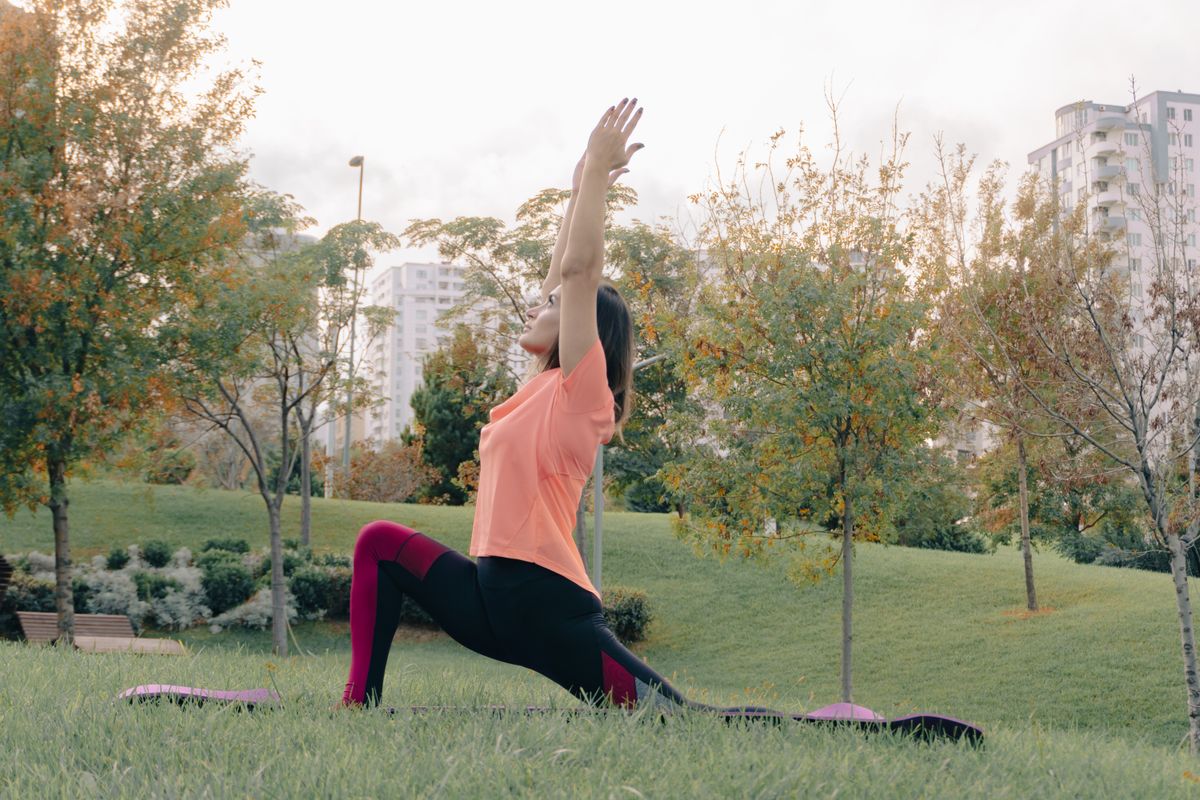
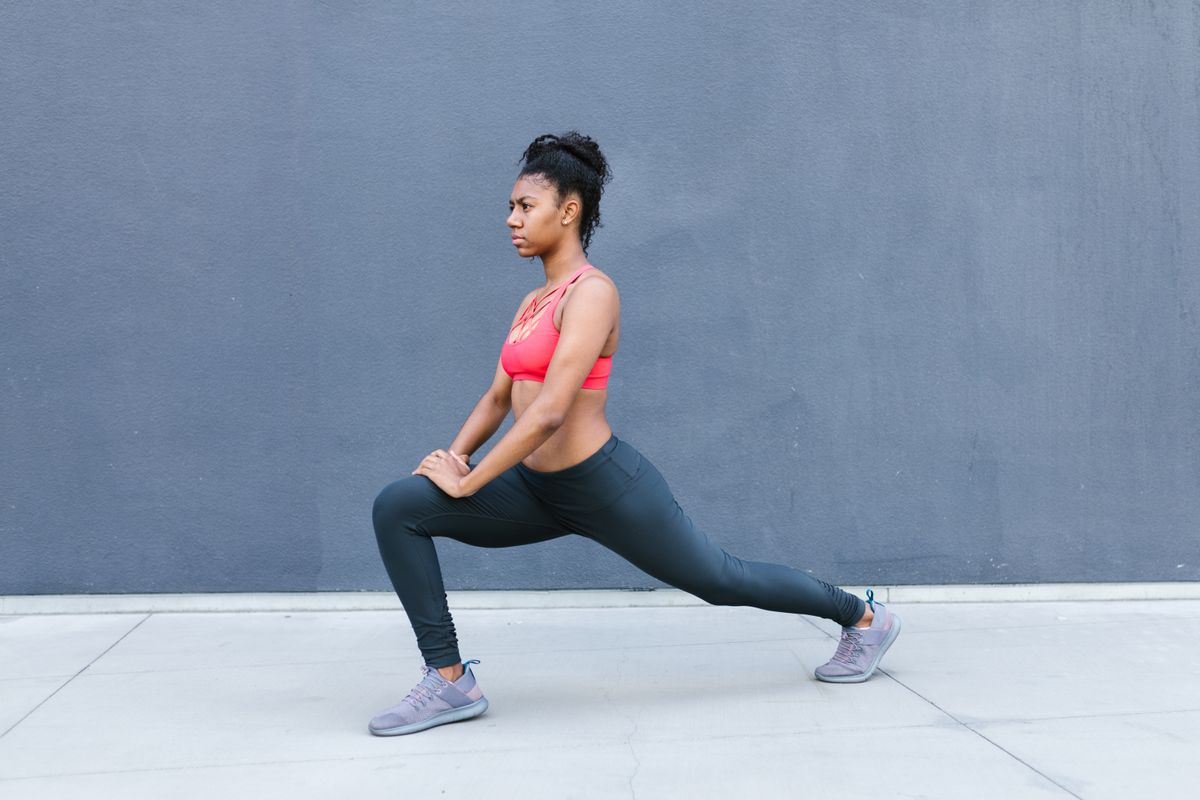
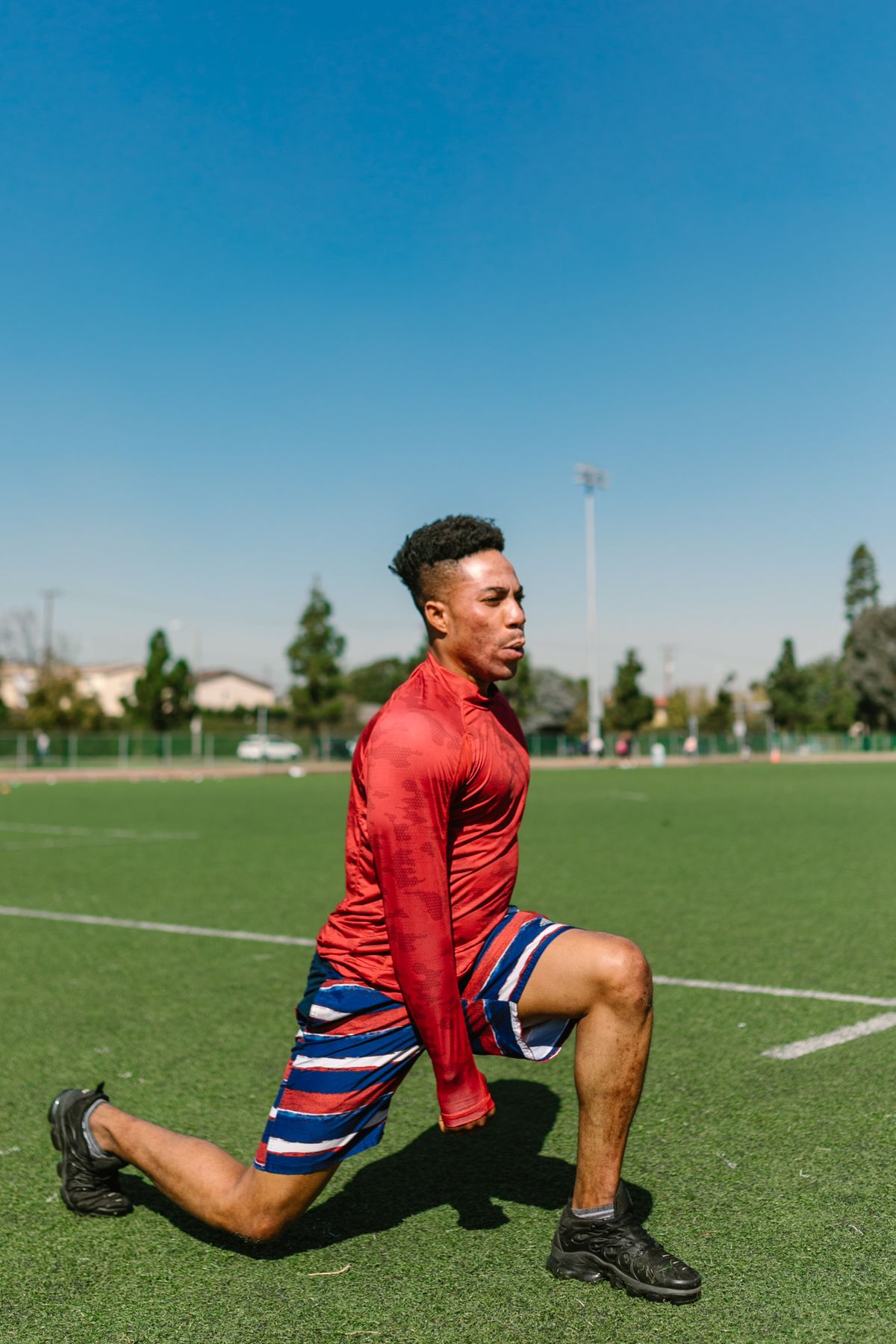
Drop into a half-kneeling lunge: one foot flat on the floor in front, the other knee on the ground behind. The front knee should be stacked over the front ankle. The back leg’s hip, knee, and ankle should line up. Put a folded towel or pad under the back knee if it’s uncomfortable.
The critical detail: pelvic tilt
Most people get nothing from this stretch because they skip this step. From the half-kneeling position, tuck your pelvis under by squeezing your glute on the kneeling side and pulling your belt buckle up toward your chest. You should feel the front of your back hip stretch immediately — without moving forward at all.
Now, with that pelvic tuck held, gently shift your weight forward. You’ll feel the stretch deepen into the upper thigh and front of the hip. Hold 30 to 60 seconds. Switch sides.
Without the pelvic tuck, you’re just arching your lower back and feeling a stretch in your quad. The tuck is the whole exercise.
Add the overhead reach
For a deeper stretch that also opens the psoas at its upper attachment, raise the arm on the same side as the kneeling leg overhead and gently side-bend away. The combination of pelvic tuck plus side bend plus reach lengthens the psoas through its full path, from the lumbar spine down to the femur.
Four more hip flexor stretches worth doing
Couch stretch
This is the half-kneeling stretch’s harder cousin. Set up the same way, but back the rear leg up against a couch or wall and let the shin run vertically up the surface. The added knee flexion ramps up the rectus femoris stretch dramatically. Same rules: pelvic tuck, glute squeeze, 30 to 60 seconds per side. Most people can’t tolerate this one immediately — work up to it.
Pigeon pose
From a high plank, bring one knee forward and place it behind your same-side wrist with the shin angled across your body. Extend the other leg straight behind you. Lower your torso forward over the front leg. This one biases the deep external rotators and the front of the back hip simultaneously. Hold 60 seconds per side.
Standing quad-and-hip stretch
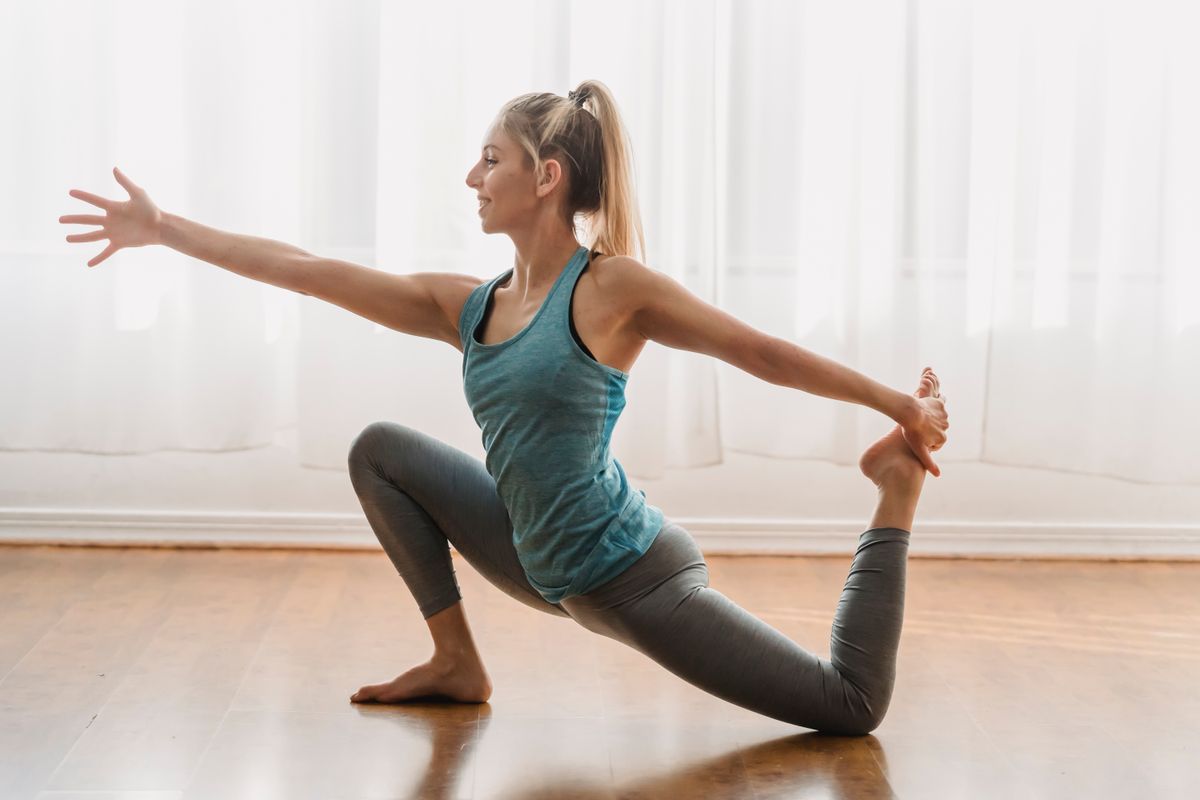
Stand near a wall for balance. Grab one ankle behind you with the same-side hand. Tuck the pelvis under (same cue as above) and squeeze the glute. The stretch should be felt across the front of the thigh and into the hip, not in the knee. If your knee is angry, take an inch of pressure off until it isn’t.
Supine 90/90 release
Lie on your back with knees bent, feet flat. Pull one knee gently toward your chest and hold while letting the opposite leg slowly straighten down toward the floor. The straightening leg gets the stretch. This is the lowest-intensity option and a good place to start if more aggressive stretches make your lower back grumpy.
How often, how long, how hard
For most desk-bound humans, daily hip flexor work for 5 to 10 minutes total is a sane dose. Two to three stretches per side, 30 to 60 seconds each, ideally split between the start of a workout and just before bed (when the day’s sitting damage is freshest).
You should feel a stretch sensation that registers somewhere around a 6 or 7 out of 10. Not pain — that’s too much, and you’ll trigger a protective contraction that defeats the point. Not a tickle — that’s too little to drive adaptation. Slightly uncomfortable but breathable is the target.
Don’t stretch cold for sprint sessions
One nuance: static hip flexor stretching immediately before sprinting or jumping work can temporarily reduce power output for the next 15 to 30 minutes. For lifting, running steady mileage, or general fitness, this doesn’t matter. For peak power athletes, save the long static holds for the cool-down or off-days, and do dynamic mobility (walking lunges, leg swings) as the pre-work warm-up instead.
Why stretching alone isn’t enough
Here’s the thing that gets glossed over: tight hip flexors are usually a symptom of weak glutes, not just shortened muscles. If you stretch every day but never train the back side of your body, you’ll keep finding the hip flexors right back where they started by the end of the week.
The strength side of the equation
Glute bridges. Hip thrusts. Romanian deadlifts. Single-leg deadlifts. Reverse lunges. These exercises train the muscles that should be lengthening the hip — the glutes and hamstrings — and they reciprocally inhibit the iliopsoas, letting it relax more deeply between sessions.
If you’re not already doing direct glute work, add it. Two short sessions a week — 10 minutes of bridges plus single-leg deadlifts — combined with daily stretching solves more chronic hip tightness than either approach alone. For a starter set of moves, see our guide to isolation work or browse the fitness archive for full glute routines.
Mistakes that make hip flexor stretching feel useless
Skipping the pelvic tuck
The single most common error. Without tucking the pelvis under, you’re stretching the rectus femoris in the quad and almost nothing in the actual iliopsoas. The tuck is non-negotiable.
Holding for five seconds and moving on
Connective tissue and muscle don’t reorganize on short timelines. Holds need to be 30 seconds minimum to start producing real changes, and 60 seconds is usually better. Three 10-second holds don’t add up to one 30-second hold.
Forcing it through pain
Sharp pinching in the front of the hip during a stretch is a sign you’re either compressing the joint capsule or aggravating something cranky. Back off. Reduce the depth. Try a different variation.
Ignoring the other side
People reliably have one hip tighter than the other. Stretch the tight side twice as long for the first two weeks and see if balance starts to even out.
Stretching without breathing
Slow nasal breathing during the hold drops the nervous system’s protective tension and lets the stretch go deeper. Holding your breath does the opposite.
How long until you feel a difference?
Most people notice the morning back stiffness easing in five to seven days. Visible postural changes — less anterior pelvic tilt, a more vertical standing posture — usually take three to four weeks of consistent work. Range of motion in squats and deadlifts improves over the first month for most people, longer for chronic cases.
If you’ve been sitting in a chair for ten years, undoing it takes more than one good stretch session. Be patient. The work compounds.
Hip Flexor Stretch FAQ
How do you know if your hip flexors are tight?
The simplest self-test is the modified Thomas test: lie on your back at the edge of a bed, pull one knee to your chest, and let the other leg hang off the edge. The hanging leg’s thigh should rest level with the bed or slightly below. If it sits noticeably above the bed line, that hip flexor is tight.
Can tight hip flexors cause lower back pain?
Yes. The psoas attaches directly to the lumbar vertebrae. When it’s short and tight, it pulls the lower spine into an exaggerated curve and creates the classic anterior pelvic tilt that loads the facet joints in the back. Stretching the hip flexors often relieves back pain even when no one ever stretched the back itself.
How long should I hold a hip flexor stretch?
30 to 60 seconds per side, two or three rounds. Shorter holds don’t produce lasting change. Longer than 90 seconds offers diminishing returns and starts to fatigue rather than lengthen the tissue.
Should I stretch hip flexors every day?
For desk workers and most adults, yes — daily is appropriate. The dose is small (5 to 10 minutes) and the sitting that creates the tightness happens daily, so the countermeasure should too.
Can I stretch hip flexors before a workout?
For most workouts, yes — it primes hip extension and helps glutes fire. The exception is right before maximal sprinting or jumping, where long static stretches can briefly reduce power. For those, do dynamic mobility (walking lunges, hip circles) instead and save the static work for the cool-down.
Are tight hip flexors connected to weak glutes?
Yes — reciprocally. Tight, dominant hip flexors inhibit glute activation; underactive glutes let the hip flexors do too much of the stabilization. The fix is both directions: stretch the fronts, strengthen the backs.
Can I do hip flexor stretches at my desk?
The standing version works at a desk. Stand next to your chair, place one foot on the seat behind you (back hip pointed forward), tuck the pelvis, and squeeze the glute. 30 seconds per side. It’s not as deep as the floor versions, but it’s far better than not stretching at all.
What’s the difference between hip flexor pain and hip flexor tightness?
Tightness is a steady restriction without sharp sensation — your hip just won’t move past a certain point. Pain is a different signal entirely and usually means inflammation, a strain, or impingement. Tightness responds to stretching; pain often doesn’t and may need rest, lower-intensity work, or a professional evaluation.
Keep going
Mobility work is a foundation, not a finish. Pair these hip flexor stretches with consistent glute strength work and the changes compound fast. Browse more fitness and movement guides on EatFitFuel to round out your routine.
Related on EatFitFuel