
You can’t spot-reduce face fat — but you can lose it. Face fat responds to the same fundamentals that affect fat anywhere else on your body: a calorie deficit, more protein, less alcohol, less sodium, better sleep, and consistent strength training. The “facial exercises” and “face yoga” routines that dominate this topic on social media don’t deliver the results their marketing promises. Here’s what actually works, what’s a waste of time, and a realistic 8-week plan to see visible change.
- You can’t spot-reduce — face fat goes when overall body fat goes
- Calorie deficit + protein is the lever that matters more than any “face exercise”
- Sodium and alcohol drive water retention that makes your face look puffier than it is
- Sleep matters — under 6 hours significantly elevates cortisol, which moves fat to the face
- Realistic timeline: 6-8 weeks of consistent effort to see visible facial change
Why your face stores fat in the first place
Face fat comes from three different sources, and understanding which one you’re dealing with changes the strategy:
Subcutaneous fat. The pinchable layer just under the skin. This is the kind that responds to overall fat loss — when you’re in a calorie deficit, you’ll lose face fat alongside fat from everywhere else, though usually not as the first place.
Water retention. Often confused with fat. A puffy face from high sodium, alcohol, poor sleep, or hormonal fluctuations can look like fat gain when it’s actually just temporary fluid. This is the easiest type to address — sometimes you’ll see a visible difference within 48 hours of cleaning up sodium and water intake.
Buccal fat. The deeper fat pad in your cheeks. Some people are born with naturally fuller buccal fat pads, and these are largely genetic — they don’t respond well to diet and exercise. The viral “buccal fat removal” surgery exists specifically for this scenario.
Most people complaining about “face fat” are dealing with some combination of subcutaneous fat and water retention. The fix is the same whether you’re losing 10 pounds or trying to look less puffy in photos: address overall body composition, then tighten the variables that affect fluid retention.

The fundamentals: calorie deficit and protein
The single biggest lever for losing face fat is the same one that drives all fat loss: a sustained calorie deficit. Your body draws fat from where it has the most stored, in the order your genetics dictate. For most people, the face is one of the first places fat shows up and one of the first places it leaves — so even modest fat loss often produces visible facial change.
How big a deficit? A 300-500 calorie daily deficit is the sweet spot for sustainable fat loss without losing muscle. That’s about 0.5-1 lb of weight loss per week. Bigger deficits work short-term but are harder to maintain and tend to backfire. Use a calorie calculator to find your maintenance number, then subtract.
Protein matters more than total calories for body composition. Aim for 0.7-1g of protein per pound of bodyweight. Protein preserves muscle (so the weight you lose comes from fat, not muscle), increases satiety (so the deficit feels less brutal), and has the highest thermic effect of any macronutrient. More on protein math here.
A typical 150-pound adult on a face-fat-loss program: 1,800-2,000 calories per day, 110-150g of protein. The exact numbers vary with sex, height, age, and activity level, but the framework holds.
Reduce sodium and alcohol — the puffiness levers
Both sodium and alcohol drive water retention, and both especially affect the face. The skin around your eyes and cheeks is thin and well-hydrated, so it’s the first place puffiness shows up.
Sodium: The U.S. Dietary Guidelines recommend under 2,300mg per day. Most Americans eat 3,500-4,500mg without realizing it because most sodium comes from processed foods, restaurant meals, and condiments — not the salt shaker. A single restaurant meal can hit 3,000mg.
Quick sodium audit: Cut out one source for two weeks (chips, deli meat, fast food, restaurant meals) and watch your face. Most people see visible reduction in puffiness within 5-7 days. The face is unusually sensitive to sodium swings.
Alcohol: Has the dual effect of being calorie-dense (7 calories per gram, about 100 per drink) and dehydrating. The dehydration triggers your body to retain water in the next 24-48 hours — which shows up as facial puffiness. Cutting alcohol entirely for 30 days is one of the most effective short-term face-de-puffing interventions.
If complete sobriety isn’t on the table, even reducing to 1-2 drinks per week from daily drinking produces noticeable facial change in 2-3 weeks.
Beer is the worst offender for face fat — it stacks calories (150-200 per can), high sodium content in many craft beers, and the carbonation/yeast that some people specifically respond to with bloating. If you’re going to drink, dry red wine or clear spirits with soda water cause less facial puffiness than beer or sweet cocktails.

Sleep, cortisol, and face fat
This is the variable most people miss. Chronic sleep deprivation (under 6 hours per night) elevates cortisol, the stress hormone. High cortisol redistributes fat — pulling it from the lower body and depositing it in the face, neck, and abdomen. The “stress face” you’ve heard about is real biology.
Targeting 7-9 hours of sleep per night is one of the most underrated face-fat interventions. People who sleep 4-6 hours per night and then “fix it” by sleeping 8 hours consistently for 4-6 weeks often report a visibly slimmer face — even before any other changes take effect.
High cortisol also drives water retention and inflammation, both of which contribute to facial puffiness. Sleep is the cheapest and most overlooked intervention in the entire face-fat conversation.
Strength train consistently
Resistance training matters for face fat indirectly. Building and preserving muscle mass keeps your resting metabolic rate higher, makes the calorie deficit more sustainable, and shifts your body composition in a way that visibly reshapes how you look from the neck down. The face follows.
3-4 sessions per week of resistance training is the sweet spot. Compound movements (squats, deadlifts, bench press, rows, overhead press) deliver the most metabolic bang per minute. Even 8-minute ab sessions add up over weeks if you can’t commit to longer workouts.
Cardio is fine but doesn’t drive body composition the way lifting does. Use cardio for heart health and to add a few hundred calories of weekly burn — not as your main fat-loss tool.

Do “face exercises” actually work?
A 2018 study from Northwestern University tested a 30-minute daily facial exercise routine in middle-aged women over 20 weeks. Result: participants did show some “muscle thickening” in cheek areas and a slight perceived improvement in firmness. But the changes were modest, the study was small (27 women), and there was no control group long enough to rule out other variables.
The honest read: facial exercises may produce small improvements in muscle tone for some people, but they don’t burn meaningful face fat. The “30 minutes a day will give you a chiseled jawline” claims are marketing.
If you enjoy doing them or they make you feel good, no harm — they’re free and low-effort. But don’t substitute facial exercises for the actual fat-loss work (deficit, protein, sleep, training). The face exercises are decoration; the body composition work is the build.
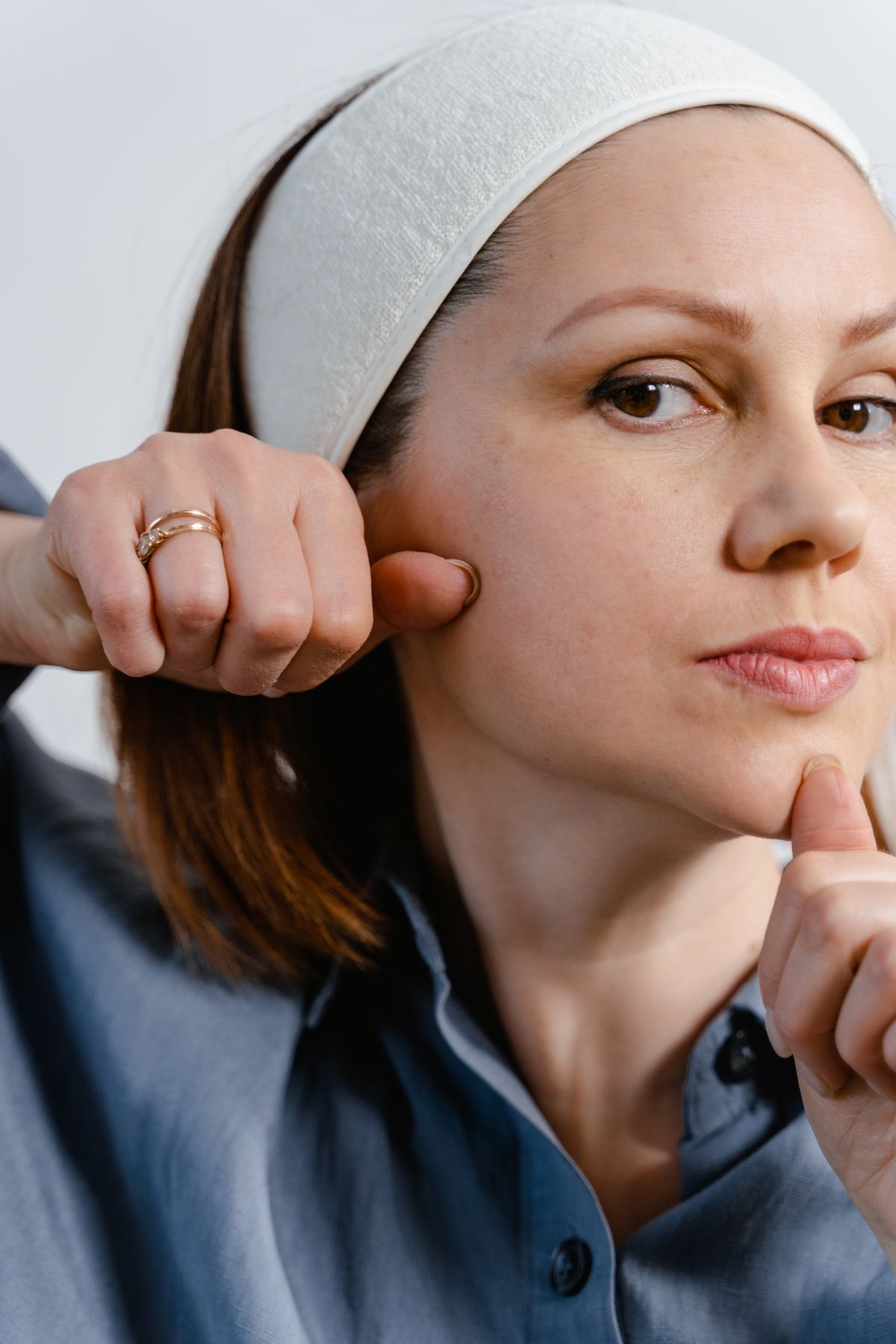
Same logic for “face yoga,” “facial gua sha,” and “face rollers” — they may produce mild lymphatic drainage that reduces temporary puffiness, but they don’t reduce fat. The puffiness reduction is real but short-lived.
An 8-week plan to lose face fat
If you commit to this for 8 weeks, you’ll see visible facial change. The plan is straightforward but the consistency matters more than perfection.
Weeks 1-2: The Audit.
- Track everything you eat in MyFitnessPal or similar — no changes yet, just data
- Note current sleep hours, alcohol intake, and exercise frequency
- Take front + side face photos in similar lighting (you’ll thank yourself in 8 weeks)
- Calculate your calorie maintenance from the tracked data
Weeks 3-4: The Foundation.
- Drop calories 300-500 below maintenance
- Hit 0.7g protein per pound of bodyweight every day
- Cut alcohol to 1-2 drinks per week (or zero)
- Reduce sodium by avoiding processed foods and restaurant meals
- Sleep 7-9 hours nightly — non-negotiable
- Begin or continue 3 strength sessions per week
Weeks 5-6: The Refinement.
- Reassess weight loss — should be averaging 0.5-1 lb/week
- If flat, drop calories by another 100-150 (don’t go below 1,500 for women, 1,800 for men)
- Add 2 short cardio sessions per week (15-20 min, moderate intensity)
- Take new photos and compare to baseline
Weeks 7-8: The Reveal.
- Maintain the deficit, protein, sleep, and training
- Take final photos and compare side-by-side with week 1
- Most people will see visible facial change at this point — sharper jawline, less under-eye puffiness, more defined cheekbones
What about specific foods that “burn face fat”?
No food specifically burns face fat. The viral lists (“eat these 5 foods to lose face fat”) are clickbait. The closest thing to truth: foods that support overall fat loss because they’re satiating and lower-calorie also support face fat loss.
Foods that genuinely help your fat loss effort:
- High-protein foods (chicken, fish, eggs, Greek yogurt, cottage cheese, tofu) — preserve muscle and increase satiety
- High-fiber vegetables (broccoli, cauliflower, leafy greens, peppers) — fill you up for very few calories. More on the best vegetables for satiety
- Berries — high fiber, low sugar, good for overall metabolic health
- Water — replaces sugary drinks and reduces sodium-driven puffiness
- Green tea — modest thermogenic effect, plus polyphenols that support fat oxidation
Foods to limit:
- Ultra-processed snacks (chips, crackers, packaged baked goods)
- Sugary drinks (soda, sweetened lattes, juice, sweetened sports drinks)
- Restaurant meals (sodium and calorie bombs)
- Alcohol (calories + dehydration + cortisol impact)
- Fast food (combination of all of the above)
FAQ
How long does it take to lose face fat?
Most people see visible facial change within 4-6 weeks of consistent effort. Significant change usually takes 8-12 weeks. Water retention can shift in days; subcutaneous fat takes weeks.
Why does my face look different in the morning?
Sleeping flat causes fluid to pool in the face overnight. Most people look puffier in the morning and slimmer by afternoon. Sleeping with your head slightly elevated and drinking 16 oz of water within 30 minutes of waking helps.
Will losing weight make my face look older?
For some people over 50, significant fat loss can reveal more visible aging signs (deeper lines, looser skin) because the fat was acting as a filler. This is genuine — and it’s why dramatic, fast weight loss often produces results people regret aesthetically. Slower loss (0.5-1 lb/week) gives skin time to adapt.
Does drinking more water help?
Yes, somewhat counter-intuitively. Adequate hydration signals your body that it doesn’t need to retain water. Chronic mild dehydration triggers retention. Aim for 80-100 oz daily for active adults.
Can hormones cause face fat?
Yes. Cortisol from chronic stress, hormonal contraceptives, hypothyroidism, and Cushing’s syndrome can all redistribute fat to the face. If you’ve gained face fat without other body fat changes, get a hormone panel from your doctor.
What about face fat surgery?
Buccal fat removal is a real procedure for genetically full cheeks, but it’s permanent and the trend is that some people regret it as their face thins naturally with age. Most people don’t need surgery — they need 8-12 weeks of consistent diet and sleep work.
Is “mewing” or jawline gum effective?
Mewing (proper tongue posture) has some advocates but the orthodontic claims are unproven. Jawline gum may modestly tone the masseter muscle but doesn’t burn fat. Both are far less effective than the fundamentals.
More on body composition, fat loss, and what’s actually evidence-based in our health & wellness library.
Related on EatFitFuel