
Overnight oats are the closest thing to a magic trick in breakfast cooking. Assemble in 3 minutes the night before, wake up to a creamy, ready-to-eat meal that delivers protein, fiber, complex carbs, and holds you for 4 hours. No stove. No microwave. No morning decisions. The catch is that most people’s first overnight oats attempt comes out sad — gluey, bland, or bizarrely watery — because the ratios are off, the oats are wrong, or the flavor is underbuilt. This guide is the fix: the master base recipe that works every time, 15 flavor variations, high-protein modifications, and the storage rules that let you meal-prep 5 jars on Sunday and eat well through Friday.
Quick Hit
The bulletproof ratio: 1/2 cup rolled oats + 1/2 cup milk + 1/4 cup Greek yogurt + 1 tablespoon chia seeds + 1 tablespoon sweetener + toppings. Use rolled oats (never quick or steel-cut), let sit at least 4 hours (overnight is ideal), and give it a stir before eating. That’s the entire recipe.
Why overnight oats work
Rolled oats soak up liquid slowly over 4-8 hours and become tender without cooking. The starches soften, the texture becomes creamy, and the flavor develops as anything you mixed in (nut butter, spices, fruit) infuses through. The chia seeds absorb additional liquid and add a subtle pudding-like thickness plus omega-3s and 5g of fiber per tablespoon.
Nutritionally: a single jar delivers 15-20g of protein (with the Greek yogurt), 10g+ of fiber, complex carbs from oats, and healthy fats from chia and nuts. Total calories 350-500 depending on portions and toppings. Substantially better satiety than most cereals or toast at similar calorie counts.
The master overnight oats formula
Base (this works every time)
1/2 cup rolled oats — old-fashioned rolled oats only. Quick oats turn to mush; steel-cut stay too firm.
1/2 cup milk — dairy, almond, oat, soy, coconut. Full-fat produces the creamiest texture.
1/4 cup Greek yogurt — adds protein, tang, and thickness. Skip if going full vegan.
1 tablespoon chia seeds — for thickness, fiber, and omega-3s.
1 tablespoon sweetener — maple syrup, honey, or 2 pitted dates blended in.
1/2 teaspoon vanilla — foundational flavor lift.
Pinch of salt — brings out sweetness.
The 4 steps
1. Combine all base ingredients in a mason jar or covered bowl.
2. Stir thoroughly to distribute the chia seeds.
3. Refrigerate 4+ hours (overnight is ideal).
4. Stir again, add toppings, eat cold or slightly warmed.
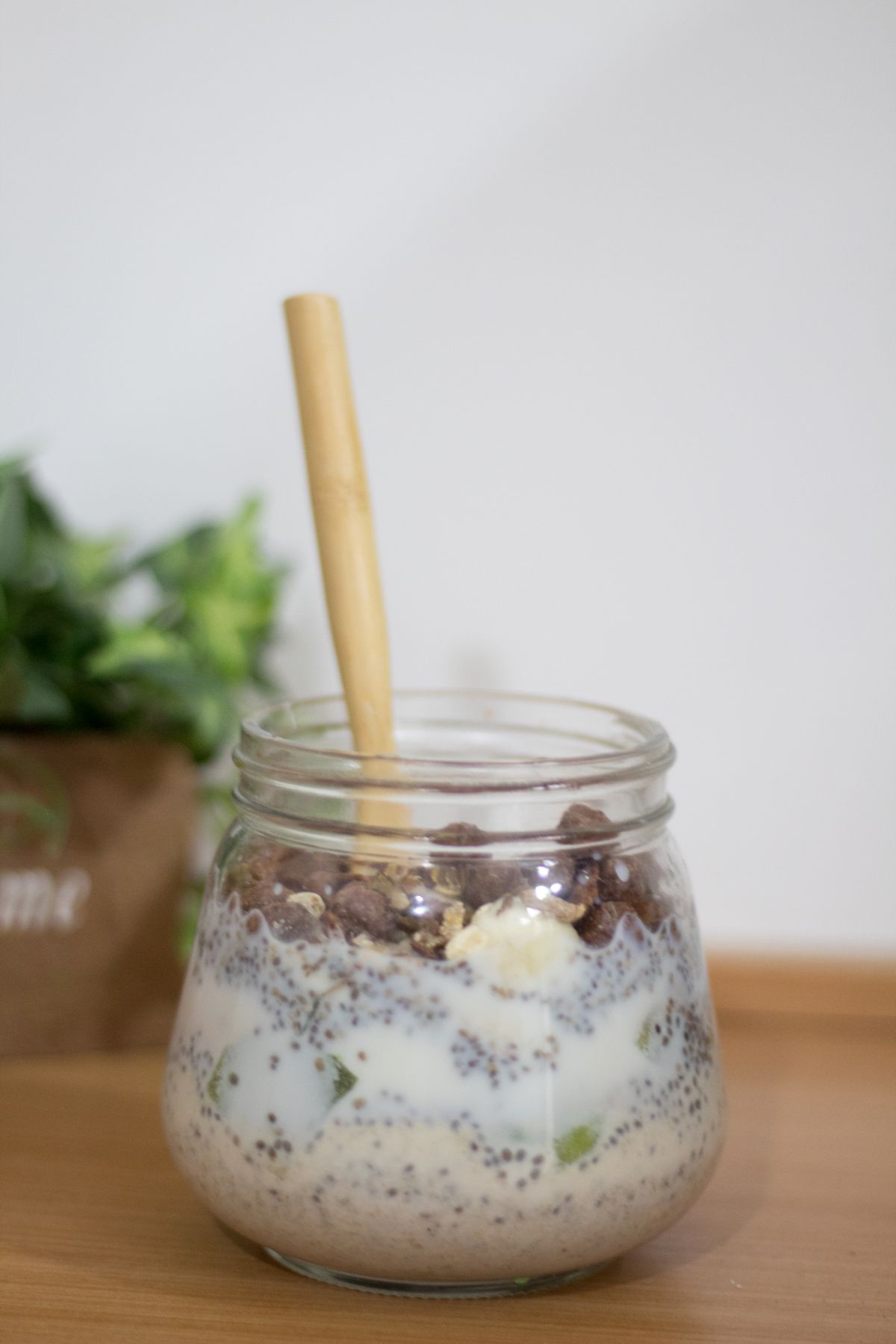
15 overnight oats flavor variations
1. Peanut butter banana
Add 1 tablespoon peanut butter + 1/2 sliced banana (added morning-of). Top with a drizzle of honey. The comfort-food classic.
2. Chocolate peanut butter
Add 1 tablespoon cocoa powder + 1 tablespoon peanut butter + extra tablespoon maple syrup. Top with dark chocolate chips.
3. Strawberry cheesecake
Add 2 tablespoons cream cheese (whipped smooth into base). Top with 1/2 cup diced strawberries + graham cracker crumbs.
4. Apple cinnamon
Add 1 grated apple + 1 teaspoon cinnamon + 1 tablespoon chopped walnuts. Cozy fall flavors, works year-round.
5. Blueberry almond
Add 1/2 cup fresh or thawed frozen blueberries + 1/4 teaspoon almond extract. Top with sliced almonds.
6. Pumpkin pie
Add 1/4 cup pumpkin puree + 1 teaspoon pumpkin pie spice. Top with pecans and maple syrup.
7. Tropical mango coconut
Use coconut milk. Add 1/2 cup diced mango + 1 tablespoon shredded coconut. Top with lime zest.
8. Carrot cake
Add 1/2 grated carrot + 1 teaspoon cinnamon + 1 tablespoon chopped walnuts + 1 tablespoon raisins. Tastes like carrot cake in a jar.
9. Snickers-inspired
Add 1 tablespoon peanut butter + 1 chopped Medjool date + 1 tablespoon cocoa powder. Top with chopped peanuts and dark chocolate chips.
10. Tiramisu
Add 1 teaspoon instant espresso + 1 tablespoon cocoa powder + 1/2 teaspoon vanilla. Top with a dollop of mascarpone and cocoa dusting.
11. Berry crumble
Add 1/2 cup mixed berries + 1 teaspoon lemon zest. Top with granola for the crumble crunch.
12. Chocolate cherry
Add 1 tablespoon cocoa powder + 1/2 cup pitted cherries. Top with sliced almonds. Feels like a Black Forest cake.
13. Nut butter and jelly
Add 1 tablespoon almond butter + 2 tablespoons strawberry jam (or a mashed strawberry mixture). Childhood in a jar.
14. Cinnamon roll
Add 1 teaspoon cinnamon + 1 tablespoon brown sugar + a small drizzle of cream cheese frosting (2 tablespoons cream cheese + 1 tablespoon powdered sugar + splash of milk).
15. Matcha green tea
Whisk 1 teaspoon matcha powder into the milk before mixing. Add 1 tablespoon honey. Top with sliced strawberries.
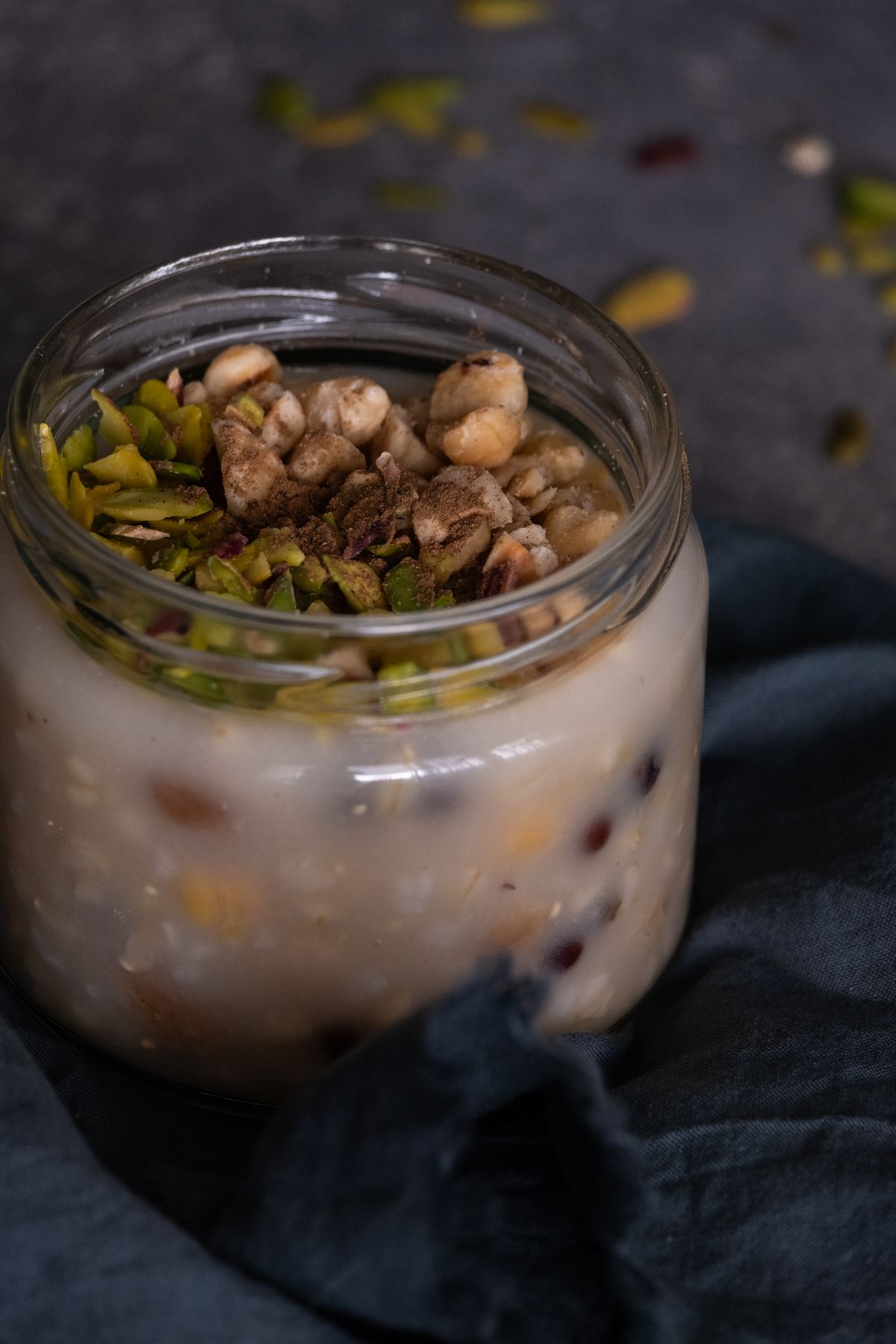
High-protein overnight oats (25g+ protein)
The protein modifications
Standard overnight oats deliver ~15g of protein. To push into 25-35g range:
Add protein powder: 1 scoop vanilla or chocolate whey (or plant-based) added to the milk before combining. Adds 20-25g protein.
Double the Greek yogurt: 1/2 cup instead of 1/4 adds another 8-10g protein.
Add cottage cheese: 1/4 cup blended into the base adds 7g protein and creamy texture.
Egg white boost: 2 tablespoons cooked and cooled scrambled egg whites (yes, actually works) adds 4g protein without changing flavor.
Top with hemp seeds: 2 tablespoons hemp seeds adds 6g protein plus crunch.
The 35g protein overnight oats
Base + 1 scoop vanilla protein powder + 1/2 cup Greek yogurt + 2 tablespoons hemp seeds + 1 tablespoon peanut butter. Roughly 500 calories, 35g protein, 10g fiber. Meal replacement or post-workout breakfast.
Weight-loss overnight oats (under 300 calories)
The trim-down version
1/3 cup rolled oats (not 1/2) + 1/2 cup unsweetened almond milk + 1/4 cup nonfat Greek yogurt + 1 tablespoon chia seeds + 1/2 tablespoon maple syrup + 1/2 cup berries. About 280 calories, 15g protein.
What to skip for weight loss
Nut butters (calorie-dense), granola toppings, extra sweetener beyond the base. Berries and Greek yogurt handle most of the flavor and satiety at lower calorie cost than nuts and syrup.
The 5-Jar Sunday
Prep 5 jars on Sunday for the entire workweek. Use 5 different flavor bases so you don’t tire of them. Total prep time: 15 minutes. Total morning time all week: 45 seconds x 5 = under 4 minutes for 5 breakfasts.
Storage and prep-ahead rules
Refrigerator life
5 days maximum. After that, texture degrades noticeably and the oats become gluey. If prepping for the week, note the date and use in order.
Fresh vs. frozen fruit
Fresh fruit (berries, banana, apple) is best added morning-of if possible. Berries and firm fruit hold up 2-3 days when mixed in; banana turns brown and mushy within a day. Frozen fruit thaws into the mix and turns everything a shade of purple/red — visually less appealing but flavor is fine.
Nut butter
Nut butter can be mixed in the night before — actually improves the flavor as it disperses through the oats. Or dolloped on top morning-of for a swirl effect.
Granola / crunchy toppings
Always added morning-of. Mixed in the night before, they turn soggy in 20 minutes and defeat the point.
Sweeteners
Liquid sweeteners (honey, maple syrup) mix in cleanly the night before. Powdered sweeteners (sugar, protein powder) can clump — whisk into the milk first before adding oats.
Common overnight oats mistakes
Wrong oats
Quick oats turn to gluey paste. Steel-cut oats stay too firm and never fully hydrate. Old-fashioned rolled oats are the only right answer for this preparation.
Ratio off
Too much liquid = soupy. Not enough = dry and pasty. Stick to 1:1 oats:milk plus 1/4 cup Greek yogurt as the reliable ratio. Chia seeds absorb about 2 tablespoons of liquid each; account for that if using more than 1 tablespoon.
Under-flavoring
Overnight oats are bland without proper seasoning. Salt, vanilla, sweetener, and a strong dominant flavor (fruit, nut butter, spice) are all necessary. Skimp on any of them and you get plain oats.
Skipping the stir before eating
Liquid tends to separate to the top overnight. A quick 20-second stir before eating redistributes the texture and prevents the “too dry / too wet” bottom vs. top complaint.
Overloading with toppings the night before
Granola goes soggy, banana turns brown, nuts lose crunch. Assemble the base the night before, add texture-dependent toppings morning-of.
Overnight oats vs. cooked oatmeal
Nutrition
Nearly identical macro profiles. Overnight oats might preserve slightly more beta-glucan (the soluble fiber that supports cholesterol reduction) because there’s no heat degradation, but the difference is marginal.
Convenience
Overnight oats win on morning speed (grab-and-go, zero cooking). Cooked oatmeal wins on preparation flexibility (make in 5 minutes any time).
Texture preference
Personal. Overnight oats have a creamy, pudding-like consistency. Cooked oatmeal is warmer, softer, more soothing. Rotate both for variety.
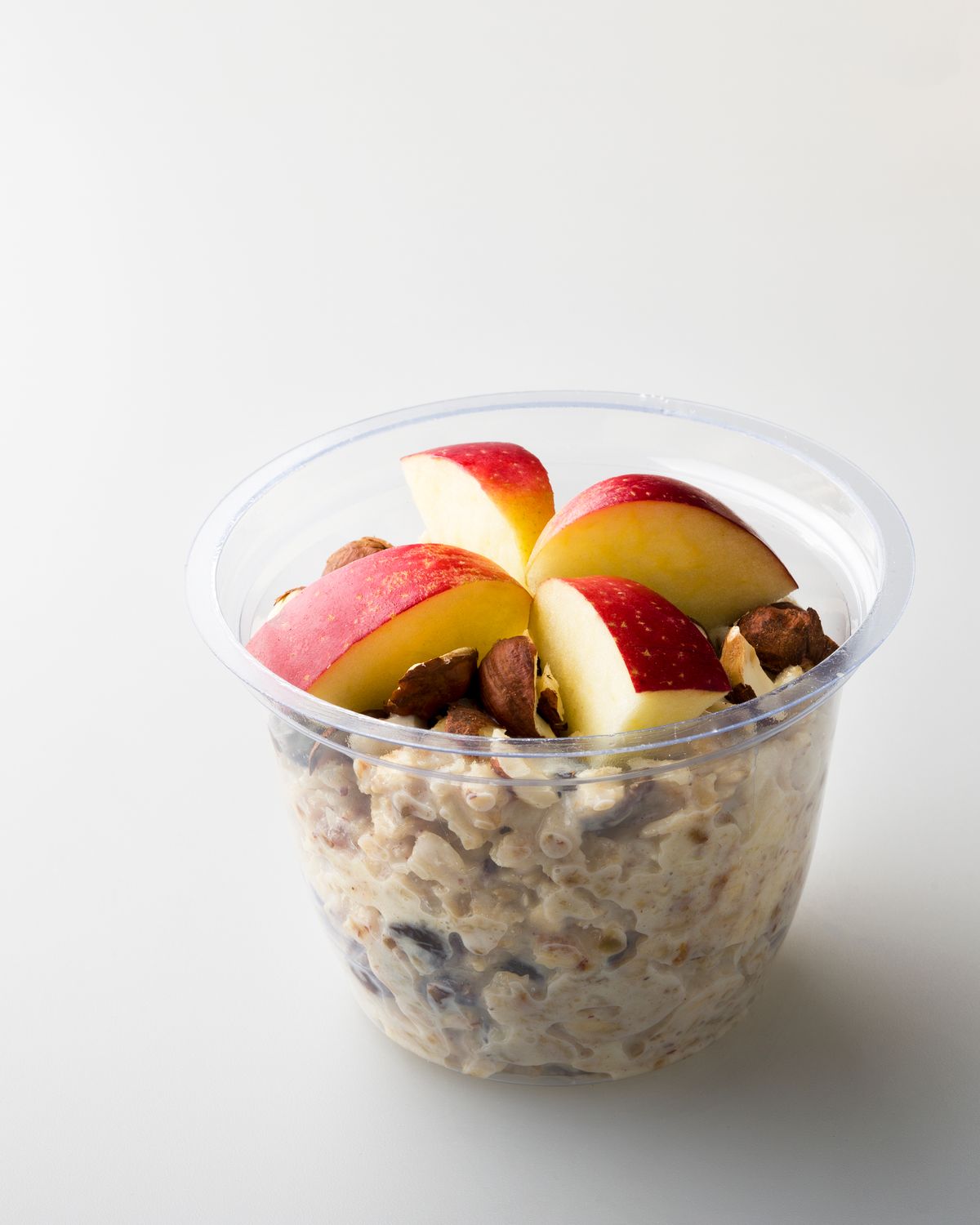
The right jar size
16-oz mason jar (pint)
Standard portion for most adults. Room for base + toppings without spillage. Fits neatly in fridge and lunch bags.
32-oz mason jar (quart)
Too big — encourages larger-than-needed portions. Skip unless you’re specifically making a double serving.
Screw-top glass containers
Also work well. Wide-mouth containers make eating easier than narrow mason jars. Look for BPA-free lids and dishwasher-safe glass.
Pairing overnight oats with a broader meal plan
Overnight oats work best as one of a 3-4 breakfast rotation, not the daily default. Even great meals become monotonous. Pair with our high-protein breakfast guide for cooked alternatives, low-calorie breakfast ideas for lighter days, and protein shakes for the highest-speed option.
Overnight Oats Recipe FAQ
What kind of oats should I use for overnight oats?
Old-fashioned rolled oats. Quick oats turn to gluey paste when soaked; steel-cut oats stay too firm and never fully hydrate. Rolled oats absorb liquid evenly and produce the creamy texture the recipe is designed for.
How long do overnight oats need to soak?
Minimum 4 hours. Overnight (8+ hours) is ideal. The oats need enough time to fully absorb the liquid and become tender. Under 4 hours produces a raw, gritty texture.
Can you eat overnight oats warm?
Yes — microwave 30-60 seconds after refrigerating. Or eat cold, which is the traditional preparation. Both work; personal preference.
How long do overnight oats last in the fridge?
5 days maximum. Texture and flavor start degrading after that. Prep 5 jars on Sunday for the full workweek.
Do overnight oats help you lose weight?
They can, if built at appropriate calorie levels. The fiber and protein produce strong satiety at moderate calorie cost. The trap is over-topping — adding nut butter, granola, and dried fruit turns a 300-calorie breakfast into an 800-calorie one. Track portions if weight loss is the goal.
Are overnight oats healthy?
Yes. Complex carbs, high fiber (10g+), moderate protein, healthy fats, no added sugar unless you add it. Support cholesterol reduction (beta-glucan), blood sugar management, and gut health. One of the most nutritionally dense breakfast options available.
Can I make overnight oats without Greek yogurt?
Yes — skip it for vegan or dairy-free. Compensate by using more milk (3/4 cup instead of 1/2) and 2 tablespoons of chia seeds instead of 1. The texture becomes slightly different but still works well.
What’s the difference between overnight oats and oatmeal?
Same base ingredient (oats), different preparation. Overnight oats soak in cold liquid for hours; cooked oatmeal is heated in liquid until it thickens. Overnight oats are creamier and cooler; cooked oatmeal is softer and warmer. Nearly identical nutrition.
Keep going
Overnight oats pair well with our high-protein breakfast, Greek yogurt guide, and protein shake recipes for a complete breakfast rotation. Browse more recipes on EatFitFuel.