
Protein shakes are the most efficient nutrition delivery system ever invented: 30+ grams of protein, micronutrients from real fruit and vegetables, and a meal-replacement-quality breakfast all assembled in 90 seconds. The problem is that most homemade shakes are either too thin to be satisfying, too sugary to be useful, or so blandly chocolate-vanilla that you stop drinking them by week two. This guide is the fix: 14 protein shake recipes with actual flavor variety, the formula for building infinite variations on your own, and the few rules that turn a sugar-bomb smoothie into a real meal.
Quick Hit
The protein shake formula: 1 scoop protein powder (25g) + 1 cup liquid + 1/2 cup frozen fruit + healthy fat + something thickening (Greek yogurt, oats, banana). Hit those 5 components and you’ve built a real meal: 350-450 calories, 30-35g protein, satisfying for 3+ hours.
The protein shake formula
Liquid base (1 cup)
Unsweetened almond milk, oat milk, regular milk, or water. Milk options add 60-120 calories. Water makes it lighter but blander. Pick based on calorie needs.
Protein powder (1 scoop, ~25g protein)
Whey is the workhorse — fast-absorbing, complete amino acid profile. Casein is slower-digesting (better at bedtime). Plant-based (pea, rice, soy) for vegan or dairy-sensitive. Look for under 5g sugar per scoop.
Frozen fruit (1/2 cup)
The single biggest texture upgrade. Frozen banana = creaminess. Frozen berries = color and antioxidants. Frozen mango or pineapple = tropical sweetness. Don’t use fresh fruit — texture suffers.
Healthy fat (1-2 tablespoons)
Nut butter (peanut, almond, cashew), chia seeds, ground flaxseed, or avocado. Slows digestion, adds satiety, smooths texture. Without fat, the protein metabolizes too fast.
Thickener (optional but recommended)
1/4 cup Greek yogurt or cottage cheese, or 1/2 cup raw rolled oats. Adds protein (yogurt/cottage cheese) or complex carbs (oats), plus serious thickness.
Classic protein shake recipes
1. Chocolate peanut butter (the gold standard)
1 scoop chocolate protein, 1 cup almond milk, 1 frozen banana, 2 tablespoons peanut butter, 1/4 cup Greek yogurt, 5-6 ice cubes. Blend. ~420 calories, 35g protein. The recipe most people use forever.
2. Vanilla berry blast
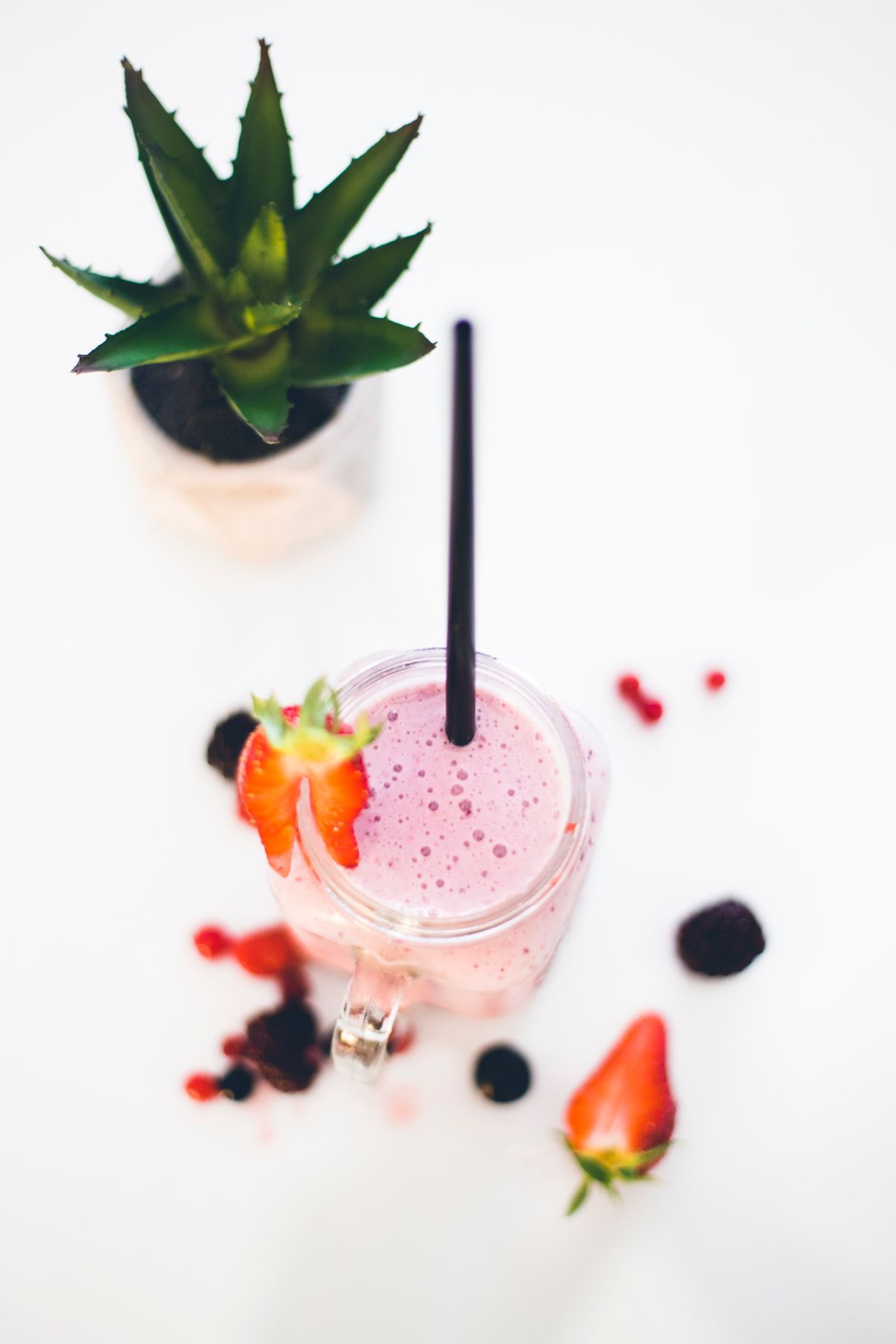
1 scoop vanilla protein, 1 cup almond milk, 1/2 cup frozen mixed berries, 1 tablespoon almond butter, 1/4 cup Greek yogurt, 1/2 cup spinach (you won’t taste it). ~380 calories, 32g protein, ton of antioxidants.
3. Strawberry banana
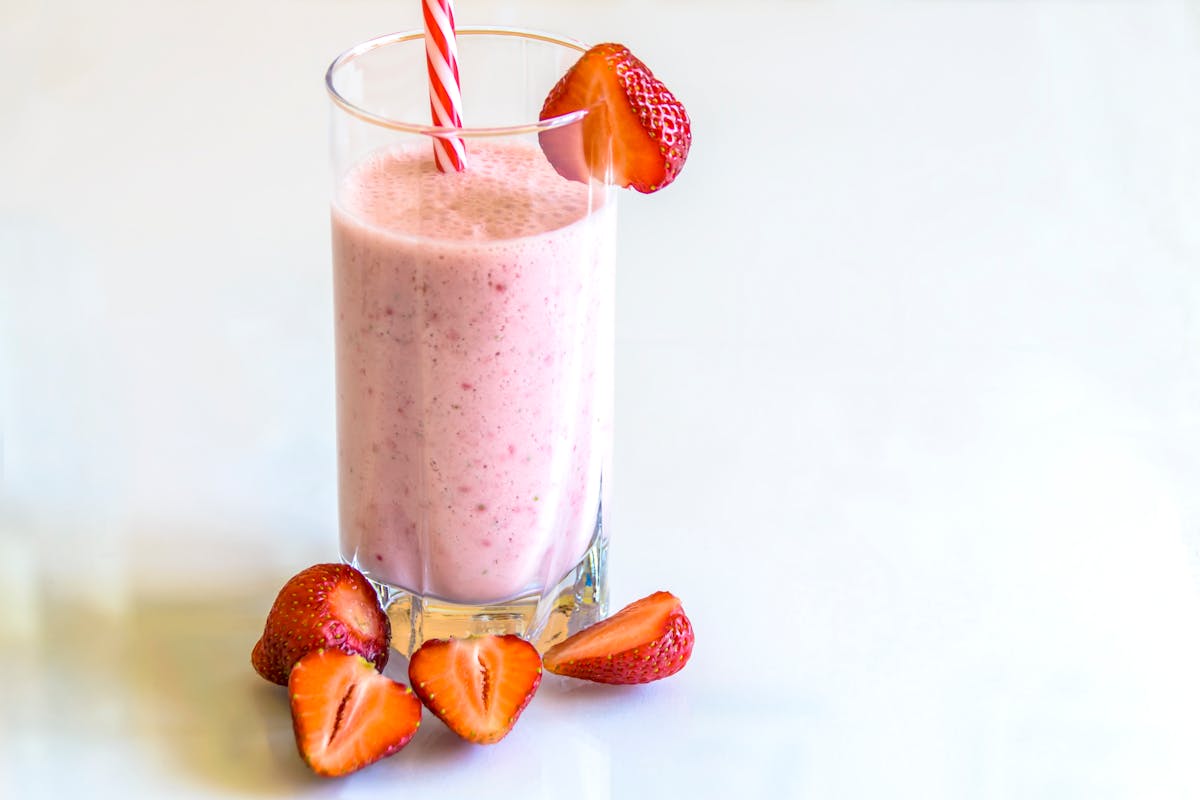
1 scoop vanilla protein, 1 cup milk, 1/2 cup frozen strawberries, 1 frozen banana, 1 tablespoon chia seeds. Classic smoothie shop flavor. ~360 calories, 30g protein.
4. Tropical mango
1 scoop vanilla protein, 1 cup coconut milk (light), 1/2 cup frozen mango, 1/4 cup frozen pineapple, 1 tablespoon shredded coconut. Vacation vibes. ~400 calories, 28g protein.
5. Chocolate cherry
1 scoop chocolate protein, 1 cup almond milk, 1/2 cup frozen pitted cherries, 1 tablespoon almond butter, 1/4 cup Greek yogurt. Antioxidant-heavy combo. ~380 calories, 32g protein.
Higher-protein shakes (40g+ protein)
6. Double protein vanilla almond
2 scoops vanilla protein, 1 cup milk, 2 tablespoons almond butter, 1/4 cup oats, 1/2 frozen banana. ~520 calories, 55g protein. For high-protein needs (post-lift, muscle gain phase).
7. Greek yogurt chocolate
1 scoop chocolate protein, 1 cup milk, 1 cup Greek yogurt (5oz container), 1 tablespoon cocoa powder, 1 tablespoon peanut butter, 1/2 frozen banana. ~520 calories, 50g protein. Greek yogurt doubles the protein.
8. Cottage cheese vanilla berry
1 scoop vanilla protein, 1 cup milk, 1/2 cup cottage cheese, 1/2 cup frozen mixed berries, 1 tablespoon chia. ~440 calories, 45g protein. Cottage cheese blends invisibly while adding casein protein.
Lower-calorie protein shakes (300 cal or less)
9. Lean vanilla berry
1 scoop vanilla protein, 1 cup unsweetened almond milk, 1/2 cup frozen berries, 1 cup spinach. ~210 calories, 28g protein. For weight-loss phases when calories are tight.
10. Chocolate green
1 scoop chocolate protein, 1 cup unsweetened almond milk, 1/2 cup spinach, 1/4 frozen avocado (creaminess), 5 ice cubes. ~260 calories, 26g protein. Spinach is undetectable in chocolate.
11. Coffee protein shake
1 scoop chocolate or vanilla protein, 1 cup cold brew coffee, 1/2 cup unsweetened almond milk, 1 tablespoon almond butter, 1 tablespoon cocoa powder, 5 ice cubes. ~280 calories, 27g protein. Caffeine + protein = pre-workout shake too.
Specialty shakes
12. Pumpkin pie protein shake
1 scoop vanilla protein, 1 cup milk, 1/2 cup pumpkin puree, 1 frozen banana, 1 teaspoon pumpkin pie spice, 1 tablespoon almond butter. ~430 calories, 32g protein. Fall flavor.
13. Salted caramel
1 scoop salted caramel (or vanilla) protein, 1 cup milk, 1 frozen banana, 2 pitted dates, 1 tablespoon almond butter, pinch of sea salt. ~440 calories, 30g protein. Dessert-level taste.
14. Snickers (protein version)
1 scoop chocolate protein, 1 cup milk, 1 frozen banana, 2 tablespoons peanut butter, 2 pitted dates, 1 tablespoon cocoa powder. ~480 calories, 33g protein. Tastes shockingly close to the candy bar.
When to drink protein shakes
Post-workout
Within 30-60 minutes of training is the “anabolic window” — research shows protein synthesis is most responsive here. 25-40g of protein with a small amount of carbs from the fruit/honey/banana works well.
Breakfast replacement
For busy mornings, a complete shake (300-450 calories) easily replaces a real breakfast. Pair with our high-protein breakfast guide for solid-food alternatives on slower mornings.
Between meals
For people trying to hit high daily protein targets (1g per pound of bodyweight), a shake between meals fills the gap that real food can’t always reach. Useful for active people and those building muscle.
Pre-bed (with casein)
Casein protein is slower-digesting (~6-8 hours). A casein shake before bed provides amino acids during sleep for overnight muscle protein synthesis. Particularly useful for lifters.
Picking the right protein powder
Whey protein isolate
The default. Fast-absorbing, ~90% protein by weight, complete amino acid profile, mild flavor. $30-50 per 2-lb tub. Best for post-workout and general use.
Whey protein concentrate
Slightly cheaper than isolate, 70-80% protein. Slightly more lactose so dairy-sensitive folks may have GI issues. Otherwise interchangeable.
Casein protein
Slower-digesting (~6-8 hours of amino acid release). Best for pre-bed shakes. Thicker texture, great for “protein pudding” recipes (blend with less liquid).
Plant-based protein
Pea, rice, soy, or blends. Necessary for vegans or dairy-sensitive. Pea protein is most digestible; rice protein has a chalkier texture. Look for combinations that provide complete amino acid profiles.
Egg white protein
Dairy-free option with a complete amino acid profile. Less common but effective. Flavor is more neutral than whey.
Label Watching
Skip protein powders with proprietary blends, added sugars over 5g per scoop, or “amino acid spiking” (cheap fillers like glycine inflating the protein number). Look for: 20-30g protein per scoop, under 5g sugar, ingredient list under 10 items, third-party tested (NSF Certified or Informed Sport).
Common protein shake mistakes
Too much fruit (sugar bomb)
2 bananas + 1 cup mango + 1 cup berries = a smoothie with 60g of sugar. Keep fruit to 1/2 cup max for most shakes. The protein and fat slow absorption; piles of sugar overwhelm it.
No fat
Without fat, the protein digests too quickly and you’re hungry in 90 minutes. Always include 1-2 tablespoons nut butter, seeds, or avocado.
Adding sweetened liquid base
Sweetened almond milk, fruit juice, sweetened vanilla milk all stack added sugar on top of fruit sugar. Use unsweetened versions and let the protein powder + fruit provide flavor.
Drinking it instead of eating real meals
Shakes are a supplement to real food, not a replacement for it. Most people should still eat 3 real meals plus 1-2 shakes — not 5 shakes per day. Whole foods provide fiber, micronutrients, and satisfaction that liquid form can’t replicate.
Using a flimsy blender
An $80 blender struggles with frozen fruit and ice. A solid blender (Vitamix, Ninja, Blendtec) saves frustration and produces smoother shakes. Worth the upgrade if you’ll make shakes weekly.
Make-ahead and storage
Pre-portion the dry ingredients
Combine 1 scoop protein + 1 tablespoon chia + dry oats in small bags or containers. Grab one in the morning, blend with liquid + frozen fruit. Cuts prep time to 90 seconds.
Refrigerated shake
A blended shake keeps 24 hours in the fridge. Texture suffers slightly — re-blend with a hand blender or shake vigorously before drinking. Don’t push past 24 hours.
Freezer smoothie packs
Pre-portion frozen fruit + Greek yogurt + nut butter into freezer bags. Dump into blender with protein + liquid in the morning. Saves serious time across a week. Pair with our meal prep containers.
Pairing with training
Protein shakes are most useful when paired with a real training stimulus. For lifters using our dumbbell exercises program, glute exercises pillar, or deadlift guide, a post-workout shake within 60 minutes optimizes recovery and adaptation.
For weight loss phases, the lower-calorie shake versions (recipes 9-11) help hit protein targets while staying in a deficit. For muscle-building phases, the double-protein versions (recipes 6-8) load up amino acids.
Protein Shake Recipes FAQ
What’s the best protein shake recipe for muscle gain?
Recipe #6 (double protein vanilla almond) or #1 (chocolate peanut butter). Both deliver 35-55g protein plus carbs from fruit/oats to replenish glycogen post-training. Drink within 60 minutes of lifting.
What’s the best protein shake for weight loss?
Recipes 9-11 (lean vanilla berry, chocolate green, coffee protein) — under 300 calories with 25-30g protein. Use as meal replacement or appetite-control snack between meals.
How much protein do I need per day?
For general health: 0.5-0.7g per pound bodyweight. For active lifters: 0.7-1g per pound. For aggressive muscle gain or aggressive fat loss: 1-1.2g per pound. A 180-lb person aiming for muscle gain would need ~150g protein daily — 1-2 shakes plus 3 protein-heavy meals.
Can I drink protein shakes every day?
Yes, with no negative health effects in healthy adults. Most active people benefit from 1-2 shakes daily. Don’t replace all meals with shakes — real food provides fiber and micronutrients that liquid form can’t match.
When should I drink a protein shake?
Within 60 minutes post-workout for muscle recovery, or as a breakfast/snack replacement to hit daily protein targets. Casein versions work pre-bed for overnight protein synthesis.
What’s the difference between whey and plant-based protein?
Whey is fast-absorbing with a complete amino acid profile and great taste. Plant-based (pea, rice, soy) is necessary for vegans/dairy-sensitive — quality has improved dramatically in recent years. Functionally similar for muscle building when you hit total daily protein needs.
Are protein shakes a meal replacement?
For occasional use, yes — a 400-calorie complete shake with protein, fat, fiber, and carbs works as breakfast or lunch. Don’t make it your ONLY meal source long-term — whole foods provide nutrition shakes can’t replicate.
Do I need protein powder, or can I get enough from food?
You can absolutely hit protein targets from food alone (chicken, eggs, Greek yogurt, fish, legumes). Powder is a convenience tool — easier than cooking a third meal, portable for travel and post-gym. Use it as a supplement to good food choices, not a substitute.
Keep going
Protein shakes pair with most of the lifting and nutrition content in our archive. Browse more recipes on EatFitFuel or check our protein bars guide, high-protein breakfast guide, and Greek yogurt deep-dive for related protein-rich options.