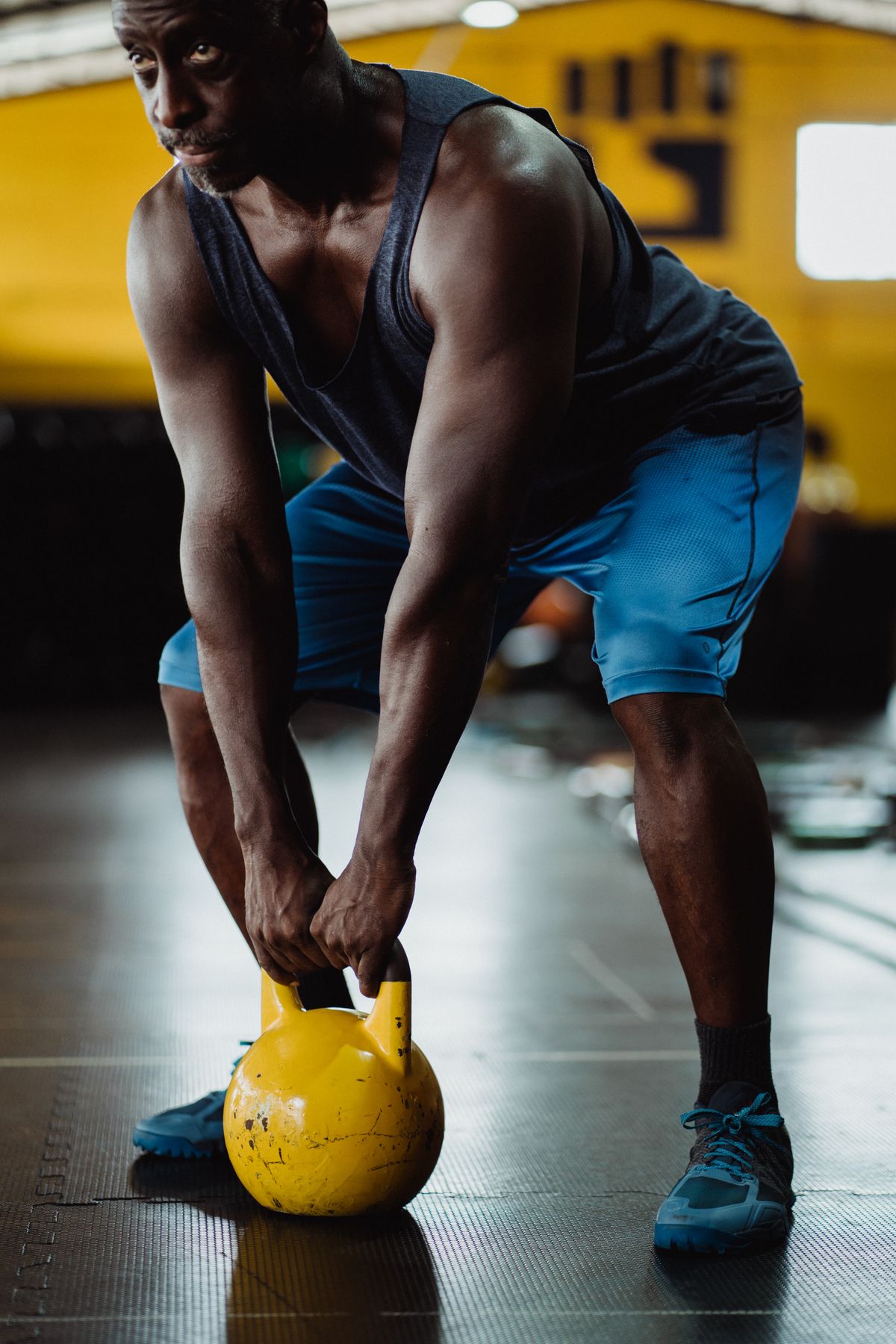
A single kettlebell can deliver one of the most metabolically taxing leg workouts you’ll do all week. Done right, a kettlebell leg session combines strength, conditioning, and mobility into 25-30 minutes of work that leaves you sweating, breathing hard, and walking slightly funny the next day. Here’s a complete kettlebell leg blaster — the exercises that matter, why kettlebells beat barbells for certain leg goals, and three workout templates from beginner to advanced.
- Why kettlebells: The off-center load forces stability work that barbell lifts don’t
- Best exercises: Goblet squat, swing, single-leg deadlift, lunge, snatch, sumo squat
- Equipment: One bell (women: 16-24kg; men: 20-32kg) — that’s it
- Workout time: 25-30 minutes for the full blaster
- Frequency: 1-2x per week, ideally on non-running days
Why kettlebells for legs?
Barbells let you load more weight more comfortably, which is why they dominate strength training. But kettlebells offer specific advantages for leg work that barbells can’t match:
Off-center loading. A kettlebell’s weight sits below your hand at an offset angle. Holding one forces your stabilizers (hips, ankles, core) to work harder than they would under a balanced barbell. The carryover to real-world movement — climbing stairs with groceries, picking up a child off the floor — is meaningfully better.
Conditioning + strength in one tool. Movements like the swing and snatch combine heart-rate elevation with leg power output. You can’t replicate that with a barbell back squat — the squat is purely strength work. Kettlebell leg work is strength and cardio.
Smaller load needed. A 24kg kettlebell (53 lbs) used aggressively delivers a leg workout comparable to a 200+ lb barbell back squat. The mechanical advantage is different — kettlebell leg work compresses more output into less weight.
Equipment minimalism. One kettlebell takes up a square foot of floor space. You can’t do a barbell back squat in a 600-sq-ft apartment. You can do a complete kettlebell leg workout there. More on minimal-equipment training here.
The 6 essential kettlebell leg exercises
1. Goblet squat
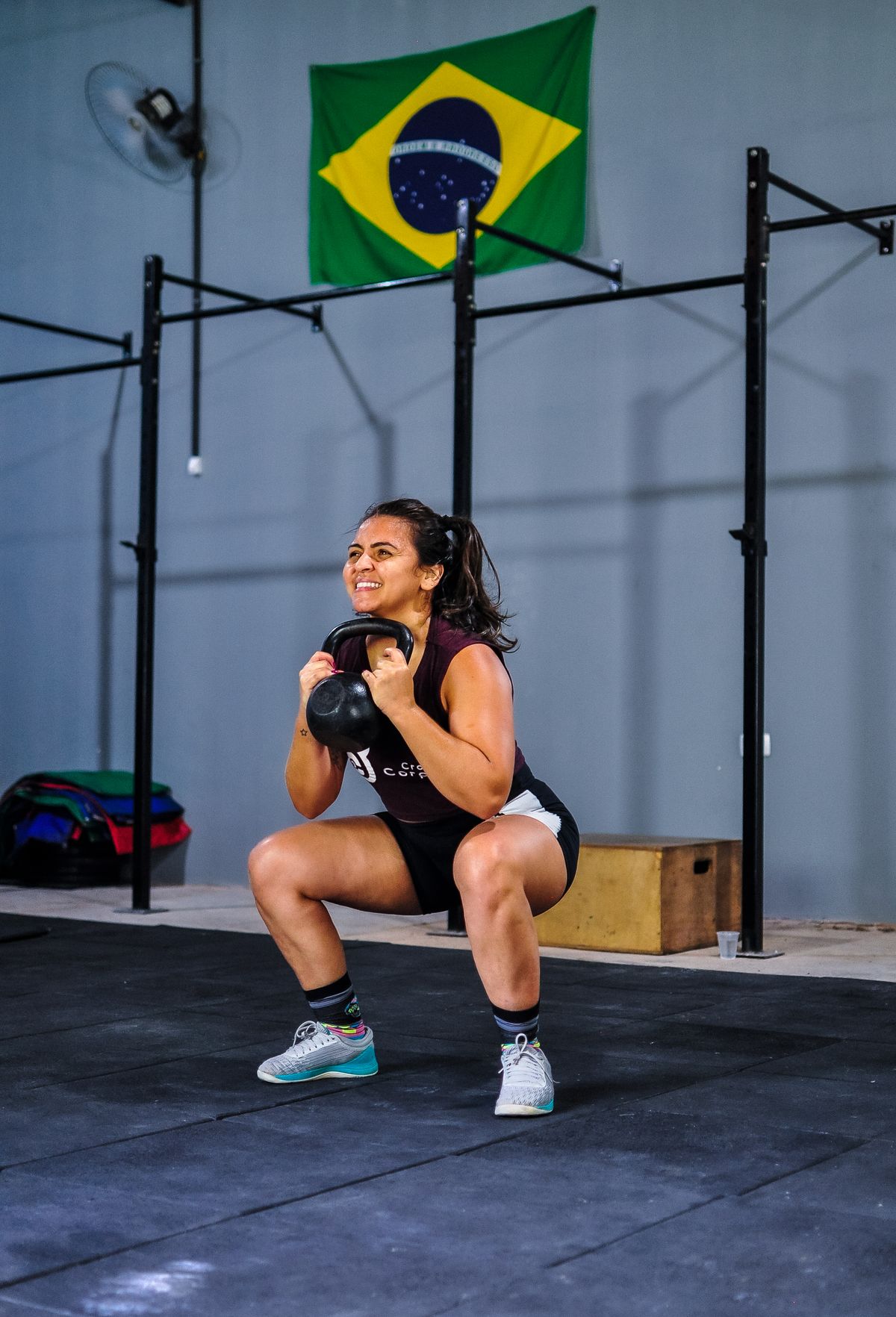
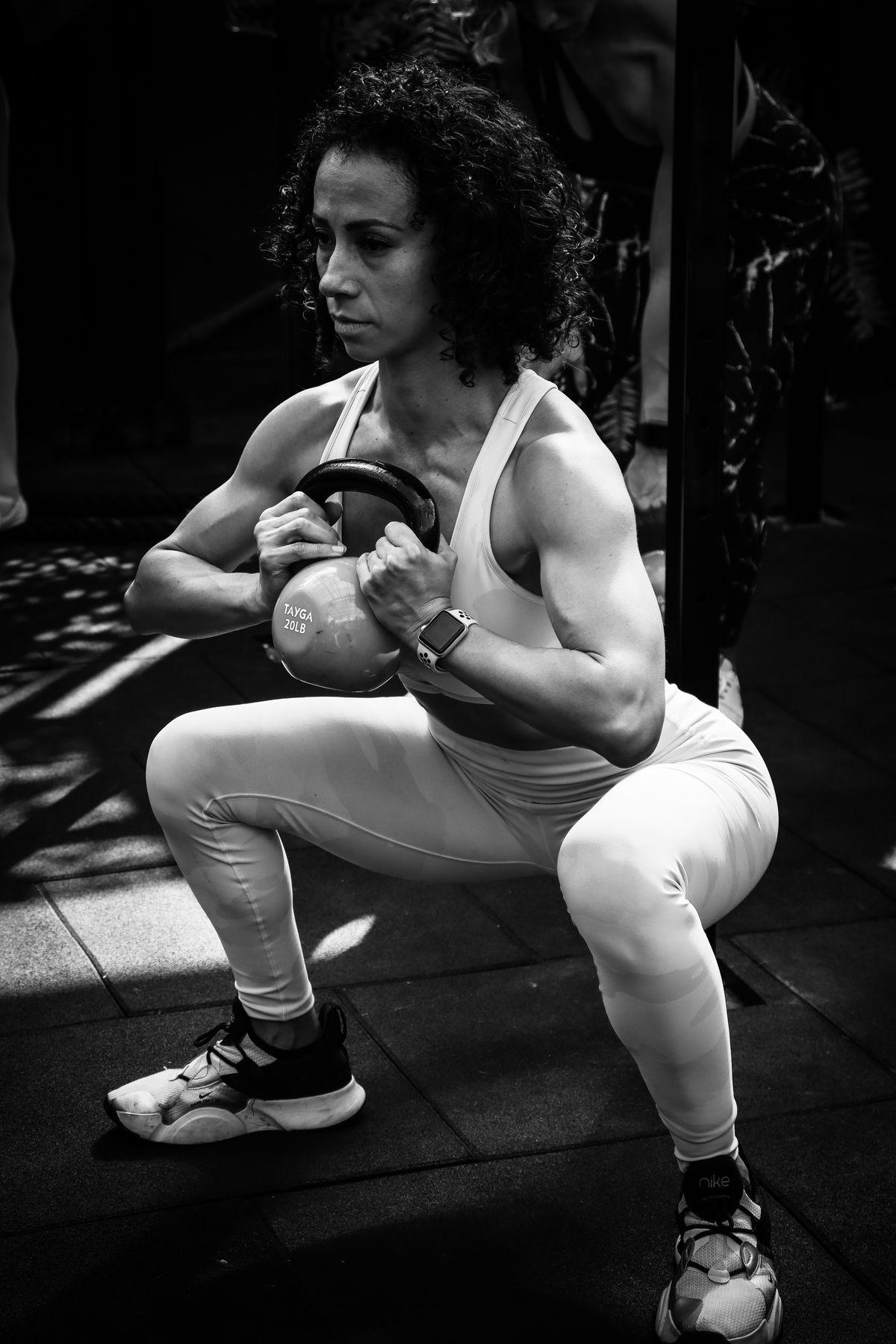
Hold the kettlebell at chest height with both hands cupping the horns (the handle bend). Squat to depth (thighs parallel or below), keeping chest up and elbows tracking inside knees. The kettlebell’s chest position naturally cues a more upright torso — making goblet squats easier to learn than barbell squats.
Best for: Quads, glutes, core. The foundational kettlebell leg movement. 3 sets of 10-15 reps.
2. Kettlebell swing
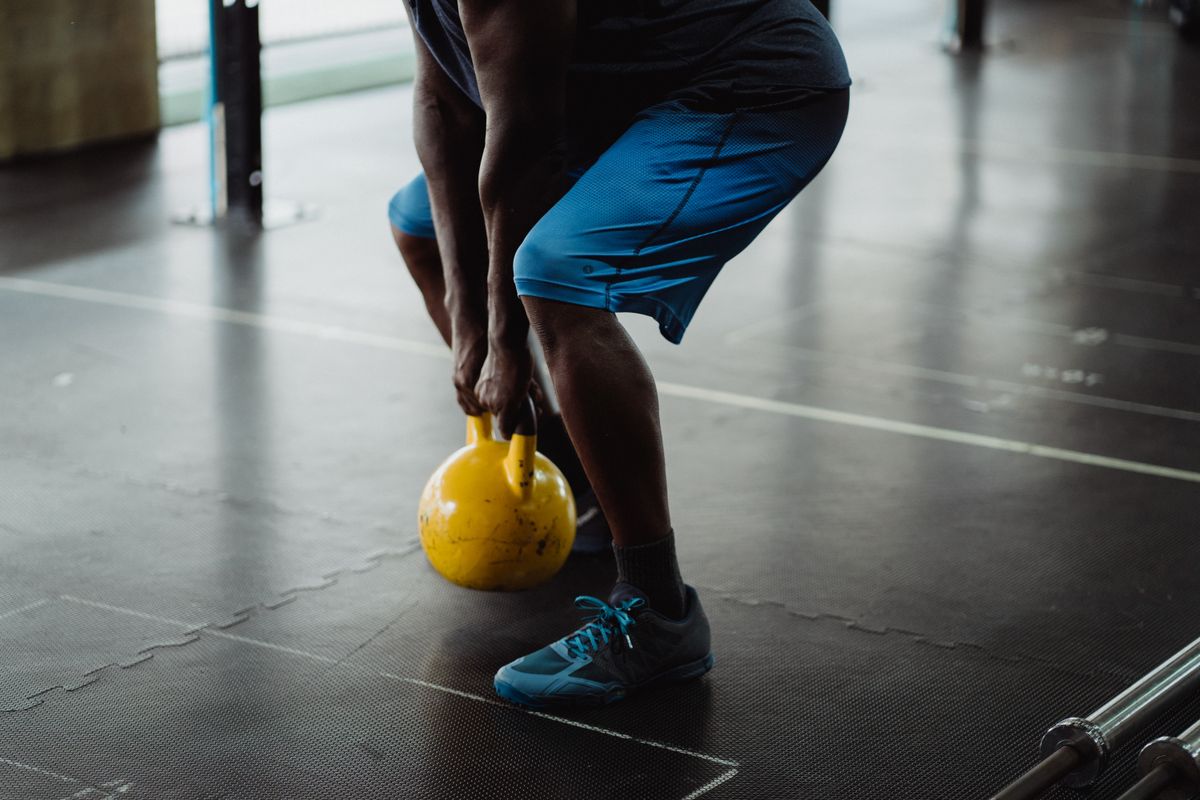
The signature kettlebell movement. Stand with feet wider than shoulder-width. Hinge at the hips (not a squat) and let the bell swing between your legs. Drive your hips forward forcefully — the bell rises to chest height by force, not by your arms lifting it. The arms are a rope; the hips are the engine.
Best for: Glutes, hamstrings, lower back, conditioning. Hands-down the most efficient posterior chain exercise. 3-5 sets of 15-25 reps.
3. Single-leg deadlift
Hold the kettlebell in your right hand. Hinge forward at the hips, lifting your left leg straight back behind you. Lower the bell toward the floor, keeping your back flat and your hips square. Return to standing. Switch sides every set or two.
Best for: Hamstrings, glutes, balance, hip stability. Reveals strength imbalances between legs. 3 sets of 8-10 per side.
4. Reverse lunge with kettlebell
Hold the bell in goblet position or in a single hand. Step backward with one leg into a lunge, lowering until your back knee is just above the floor. Drive through the front foot to return. Reverse lunges are easier on the knees than forward lunges and place more emphasis on the glutes.
Best for: Quads, glutes, balance, knee stability. 3 sets of 8-12 per leg.
5. Kettlebell snatch
An advanced movement. The bell starts between your legs (like a swing) and ends overhead with a straight arm in one continuous motion. Drives the same hip hinge as the swing but adds upper-body involvement and aggressive overhead stability.
Best for: Total-body conditioning, power, glutes. The classic 10-minute snatch test (max snatches in 10 minutes) is one of the most demanding kettlebell efforts. Build up gradually. 3-4 sets of 5-8 per side once you’ve mastered swings.
6. Sumo deadlift / Sumo squat
Stand with feet very wide, toes turned out. Hold the kettlebell between your legs with both hands. Squat down by sitting between your hips, then drive up. The wide stance shifts emphasis to the inner thighs and glutes — areas that conventional squats often underwork.
Best for: Inner thighs, glutes, hip mobility. 3 sets of 10-15 reps.
For every hip-hinge kettlebell movement (swing, single-leg deadlift, sumo deadlift): imagine you’re trying to push your hips backward into a wall behind you. The bell follows the hip movement, not the other way around. Most form problems on these exercises disappear when you internalize “hips back, not down.”
Three kettlebell leg workouts
Beginner: 20-Minute Foundation
For someone new to kettlebells. Use a moderate weight (women 12-16kg, men 16-20kg).
- Warm-up: 5 minutes of bodyweight squats and hip circles
- Goblet squat — 3 sets of 10 reps, 60 sec rest
- Two-handed swings — 3 sets of 15 reps, 60 sec rest
- Reverse lunges — 3 sets of 8 per leg, 60 sec rest
- Single-leg deadlifts — 2 sets of 8 per leg, 60 sec rest
Total time: ~25 minutes. Quality over speed. Master the form before pushing volume or weight.
Intermediate: 25-Minute Blaster
Use a heavier bell (women 16-20kg, men 20-24kg). Done as a circuit with shorter rest.
- Warm-up: 5 minutes of dynamic mobility (squats, hip circles, leg swings)
- Round 1 (rest 90 sec between rounds, 30 sec between exercises):
- Goblet squat — 12 reps
- Two-handed swings — 20 reps
- Reverse lunges — 10 per leg
- Round 2:
- Sumo deadlift — 12 reps
- Single-leg deadlift — 8 per leg
- Two-handed swings — 25 reps (heavy)
- Finisher: 100 swings broken into sets of 25, with 30 sec rest between
Total time: ~30 minutes. Heart rate stays elevated throughout. Expect to be drenched.
Advanced: 30-Minute Density Workout
For experienced lifters. Heavy bell (women 20-24kg, men 24-32kg). Time-cap based.
- Warm-up: 8-10 minutes including some single-arm swings to prep
- “Every minute on the minute” (EMOM) for 20 minutes:
- Min 1: 6 goblet squats
- Min 2: 10 two-handed swings
- Min 3: 6 reverse lunges per leg
- Min 4: 6 single-leg deadlifts per leg
- Min 5: 5 snatches per side (alternate)
- (Repeat the 5-minute cycle 4 times)
- Finisher: 5 minutes of single-arm swings, 20 reps per side, alternating
Total time: ~35 minutes. The EMOM structure means rest decreases as you fatigue. Brutal in the best way.
Choosing the right kettlebell weight
If you’re buying one bell, get a heavier one than feels comfortable. Most beginners gravitate toward bells too light to challenge them. The standard recommendations:
Women starting out: 12-16kg (26-35 lbs). 16kg is the sweet spot if you’ve done any strength training. 12kg only if you’re truly brand new to lifting.
Men starting out: 16-20kg (35-44 lbs). The 16kg is the historical “Russian standard” — most healthy adult men can swing it for 20+ reps. Go up to 20kg if you’ve trained consistently for 6+ months.
Intermediate (after 6+ months): 20-24kg for women, 24-32kg for men. Two bells is even better — one for goblet squats and lunges (heavier), one for swings and snatches (lighter).
Quality matters. Cast-iron competition kettlebells (Kettlebell Kings, Rogue, Onnit) are worth the $40-80 premium over the cheap chrome-plated bells from Amazon. The smooth handle, balanced design, and durable construction make a real difference. Budget bells often have rough handles that tear up your hands during high-rep swings.
How often should you do kettlebell legs?
Most lifters: 1-2 sessions per week. Kettlebell leg work generates significant muscle damage, especially the swing and snatch. Trying to do this 3-4x per week means showing up exhausted, with form deterioration following.
Pair with non-running days. A kettlebell leg session burns more energy and creates more fatigue than most cardio sessions. Doing intense kettlebell work and a long run on the same day (or back-to-back days) is asking for injury.
Recovery rules: Take 48 hours minimum between heavy kettlebell leg sessions. Walking, swimming, and yoga on off days are fine and may help recovery. Post-workout fueling matters more after kettlebell sessions than after typical lifts because of the cardio component.
Common mistakes
Squatting in the swing. The kettlebell swing is a hip hinge — knees stay relatively straight, hips fold backward. If your knees are bending significantly, you’re squatting. The swing is supposed to feel like a deadlift in motion, not a squat with extra weight.
Lifting the bell with the arms. The hips drive the bell up, full stop. If your shoulders feel torched after swings but your glutes don’t, you’re using your arms instead of your hips. Slow down and reset the movement pattern with lighter weight.
Going too heavy too fast. The kettlebell swing especially can wreck your lower back if you’re not strong enough to control the trajectory. Start lighter than your ego wants and build up over weeks.
Skipping the warm-up. Kettlebell leg work demands hip mobility, ankle mobility, and core stability all at once. Cold lifters get hurt. Spend 5-8 minutes on dynamic mobility before the working sets.
Holding the bell too tight. Especially on swings, a death grip wears out your forearms before your legs are tired. Grip just hard enough to keep the bell from flying — your hands should fatigue last, not first.
FAQ
Can I build muscle with just kettlebells?
Yes, especially in the first 6-12 months of training. Past that, building maximum muscle benefits from heavier loads (barbells) for compound lifts. But kettlebells alone can produce meaningful muscle gain for most people in the early years and maintain strength indefinitely.
How long until I see leg results?
Strength gains show up in 4-6 weeks (you can swing or squat heavier). Visible muscle change takes 8-12 weeks. Cardiovascular conditioning improves dramatically within 3-4 weeks of consistent training.
Are kettlebell swings bad for your back?
Done correctly, no — they actually strengthen the lower back. Done with poor form (lifting with the arms, rounding the spine), they can absolutely cause injury. Learn from a qualified coach or use beginner-tutorial videos before going heavy.
Should I do kettlebell legs before or after cardio?
Before, if you do both in the same session. Strength and power work require fresh muscle and a sharp nervous system. Cardio after is fine. Cardio before depletes your performance on the strength portion.
What if I only have one kettlebell?
One bell is enough for a complete leg workout. The 6 exercises above all use a single kettlebell. Two bells unlock more variations (double-front squat, suitcase deadlift) but aren’t required for results.
Can women lift heavier kettlebells than they think?
Almost always yes. Most women buying their first kettlebell choose a 6-8kg bell, which is too light for swings and goblet squats. The standard recommendation for healthy adult women starting out is 12-16kg. The 16kg becomes appropriate quickly.
Are kettlebell complexes effective for fat loss?
Yes — combining 3-5 kettlebell exercises in a flowing complex (e.g., swing → clean → squat → press → reverse lunge) elevates heart rate to running-equivalent levels while building strength. 15-20 minutes of complex work is one of the most time-efficient fat-loss training tools available.
More kettlebell workouts, leg-day templates, and minimal-equipment training in our fitness library.
Related on EatFitFuel