
The original version of this article promised to “trim thigh fat” with eight leg exercises. That promise has a problem: you cannot spot-reduce fat from a specific body part by working it. The research on this is unambiguous. Doing a thousand inner-thigh leg lifts does not burn inner-thigh fat — it builds inner-thigh muscle under whatever fat happens to be there.
Which is good news, actually, because what you can do is build leaner, stronger, more capable legs. The exercises below do that. Pair them with sensible eating and overall activity, and over weeks and months your whole body composition shifts, including your thighs. The mechanism is real. The timeline and the language just have to be honest.
What this workout delivers
Stronger quads, hamstrings, glutes, and inner thighs. Better posture and stride. A foundation for noticeable “toned” appearance when paired with consistent overall activity and nutrition. Not a magic thigh-slimmer — because nothing is.
The spot reduction myth (and what actually works)
“Spot reduction” is the idea that you can burn fat from a specific area by training the muscles underneath it. Multiple decades of research have tested this idea and repeatedly found it doesn’t work. When you lose body fat, your body pulls from stored fat across your entire system, largely following genetics rather than which muscles you trained.
What leg training does do:
- Builds muscle in the quads, hamstrings, glutes, and inner/outer thighs. More muscle in a region changes its shape and improves its “tone” — the visible firmness and definition.
- Burns calories — and large leg muscles burn more calories than smaller upper-body muscles at the same intensity, which supports overall fat loss.
- Elevates the resting metabolic rate modestly over time as lean mass increases.
So: if your goal is leaner-looking legs, the path is (a) build leg muscle through the kind of workouts below, (b) maintain a small overall calorie deficit or neutral intake depending on starting point, and (c) let the body reveal the shape over a period of months. This is boring advice. It’s also the advice that actually works.
The 8 exercises
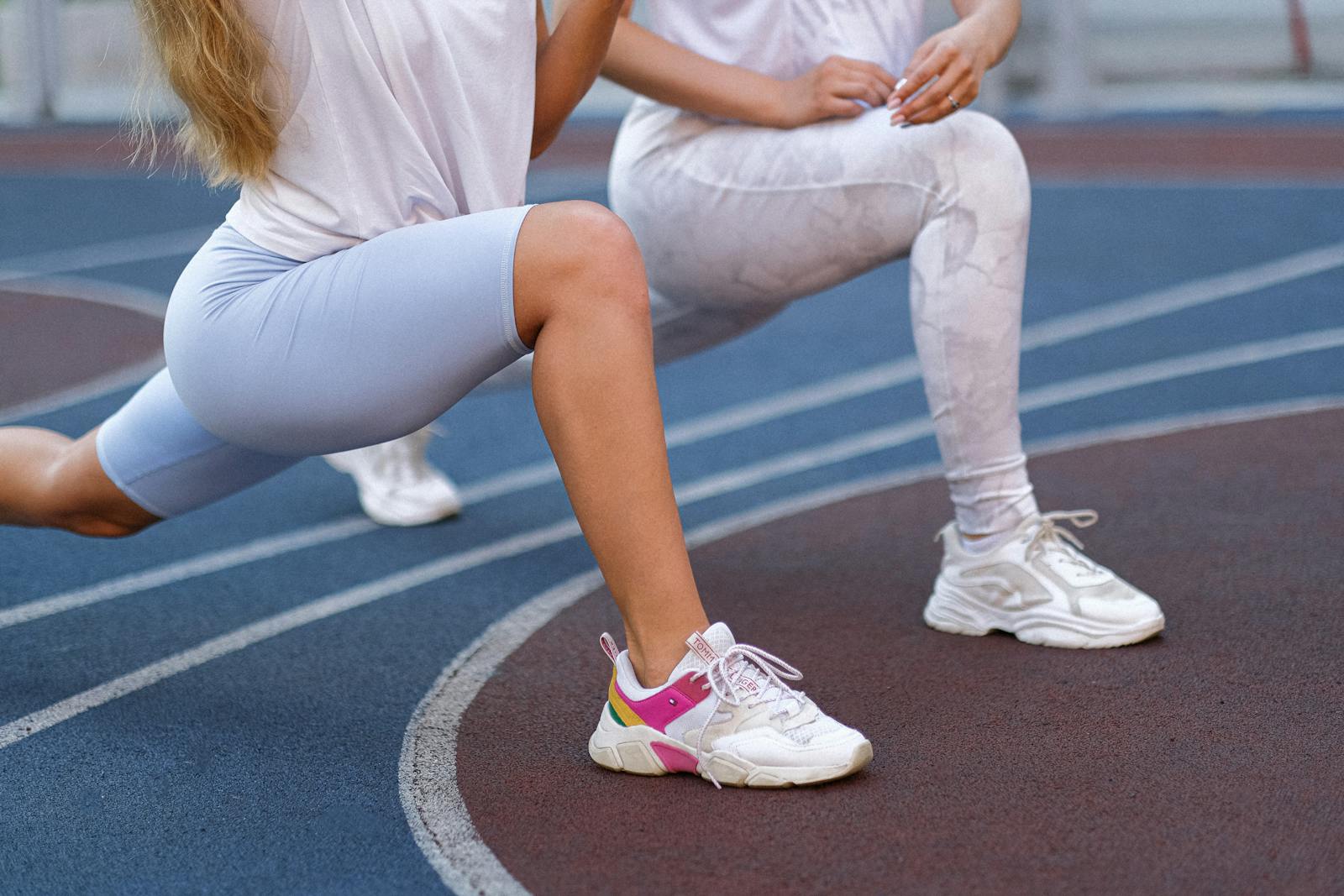
Four bodyweight movements and four weighted (dumbbell or kettlebell) movements. Each section includes a bodyweight-only option so everything works at home with or without equipment.
1. Goblet squat
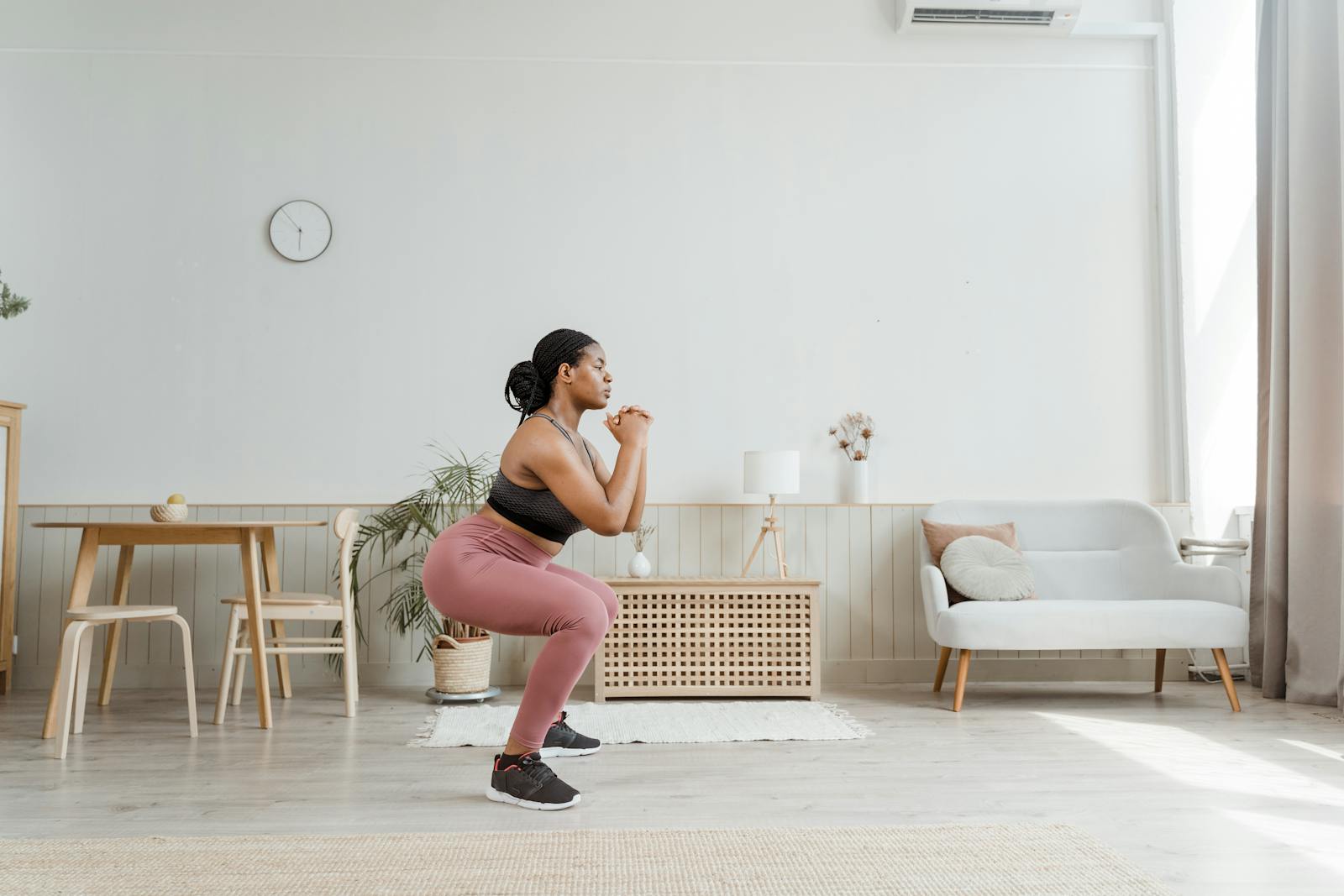
Stand feet shoulder-width, holding a single dumbbell or kettlebell at chest level with both hands. Squat down, keeping your chest up and knees tracking over toes, until your elbows touch the inside of your knees. Drive through your heels to stand.
Bodyweight alternative: standard bodyweight squat with a 3-second eccentric (downward) phase.
Muscles: quads, glutes, core.
2. Reverse lunge
Stand tall. Step one leg straight back into a lunge — back knee hovering just above the floor, front thigh parallel to the ground. Drive through your front heel to return to standing. Alternate legs.
Reverse (back-stepping) lunges are easier on the knees than forward lunges because they don’t require deceleration against momentum. The glutes work harder than in forward lunges too.
Muscles: quads, glutes, hamstrings, stabilizers.
3. Curtsy lunge
Stand feet hip-width. Step your right leg diagonally behind and across your left leg into a lunge, as if curtsying. Back knee hovers just above the floor. Return to standing. Alternate sides.
Curtsy lunges hit the outer glute (gluteus medius) and inner thigh more than standard lunges — crucial for the side-to-side shape of the upper leg.
Muscles: glute medius, inner thigh, quads.
4. Bulgarian split squat
Stand a few feet in front of a bench or sturdy chair. Place the top of your back foot on the bench. Lower straight down until your front thigh is parallel to the floor, then drive up through the front heel. Do all reps on one leg, then switch.
This is the single most effective exercise in this list for upper-leg strength and shape. It also exposes left/right strength imbalances — nearly everyone has them.
Muscles: quads, glutes, hamstrings, balance.
5. Romanian deadlift (RDL)
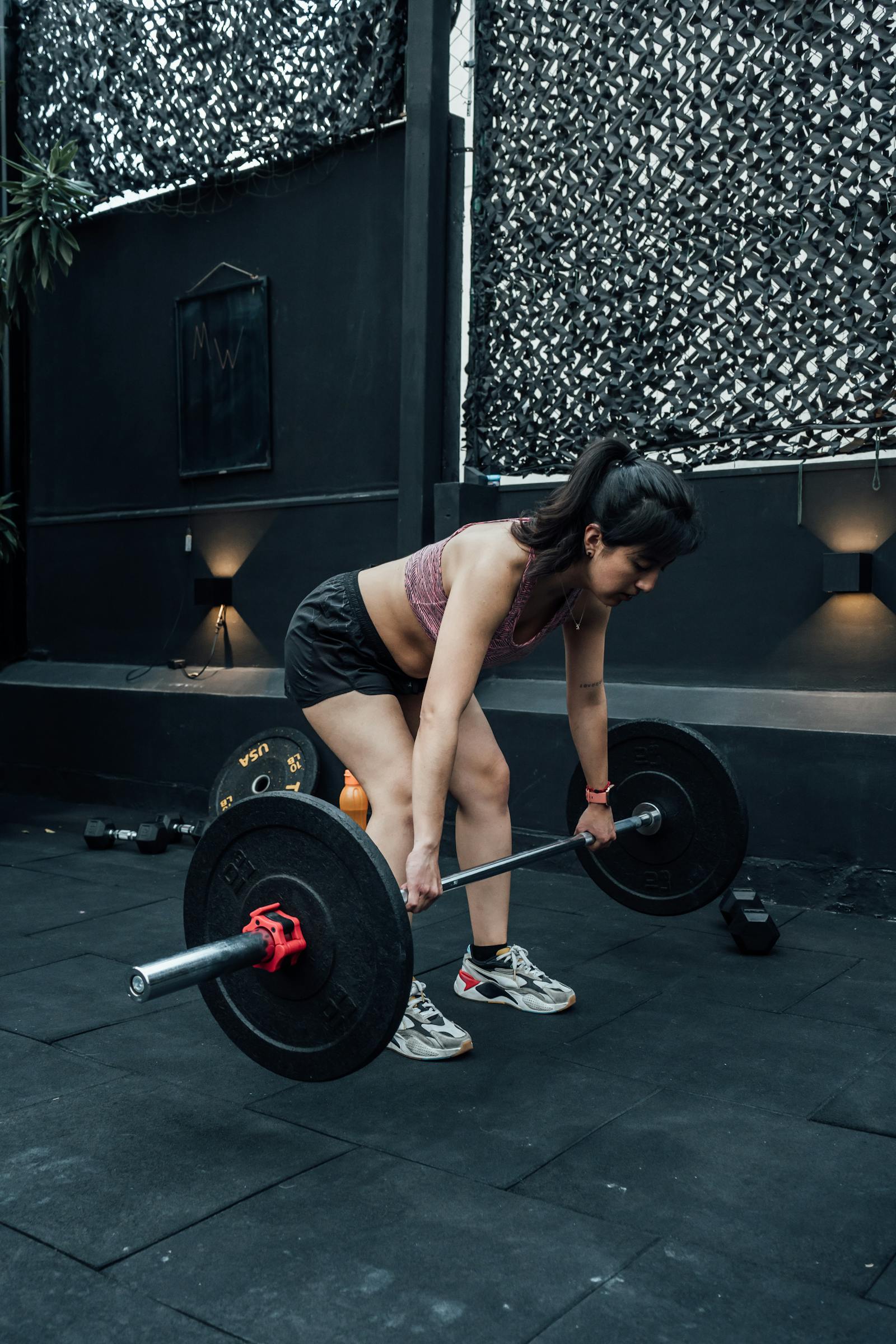
Hold a pair of dumbbells in front of your thighs. Stand feet hip-width with a slight knee bend. Hinge at the hips (not the waist) and let the dumbbells travel down the front of your legs while pushing your hips back. Lower until you feel a deep stretch in the hamstrings — usually just below the knee. Return to standing by driving your hips forward.
Bodyweight alternative: single-leg deadlift — stand on one leg, hinge forward reaching toward the floor, return to standing. Smaller range, same pattern.
Muscles: hamstrings, glutes, lower back.
6. Glute bridge
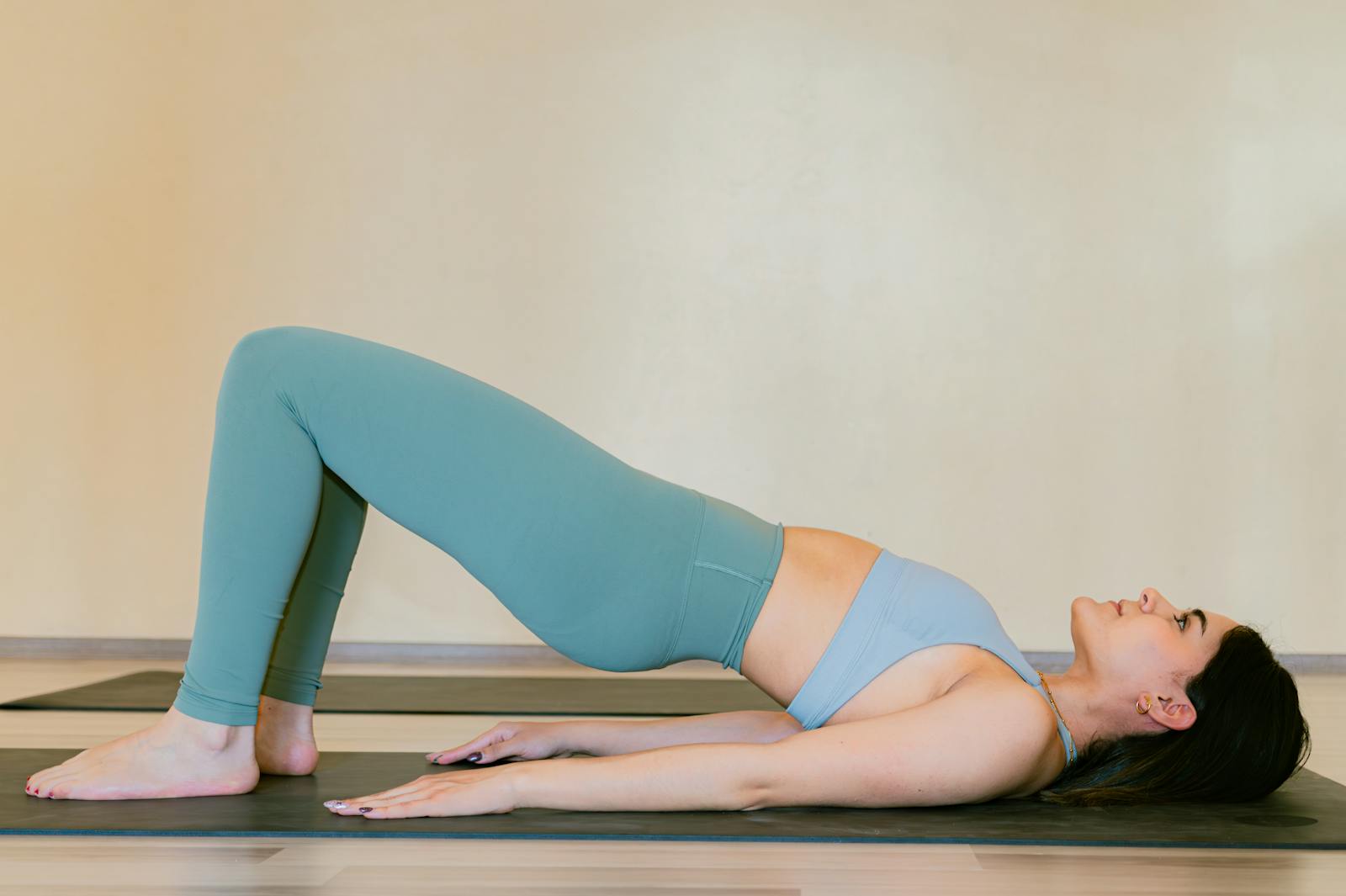
Lie on your back with knees bent and feet flat on the floor, about hip-width. Drive your hips toward the ceiling until your body forms a line from knees to shoulders. Squeeze the glutes hard at the top for 2 seconds. Lower with control.
Harder version: single-leg glute bridge — one foot on the floor, the other extended straight up. Reps drop in half but the difficulty triples.
Muscles: glutes, hamstrings, posterior chain.
7. Wall sit
Slide your back down a wall until your thighs are parallel to the floor, knees at 90 degrees, feet roughly two feet from the wall. Hold. Breathe. That’s the whole exercise.
Wall sits build isometric endurance in the quads — a fundamentally different training stimulus from moving exercises. Don’t skip them because they’re “simple.”
Muscles: quads, isometric core.
8. Lateral lunge
Stand feet together. Step one leg out wide to the side, bending that knee while keeping the other leg straight. Push hips back, chest up. Reach the opposite hand toward the floor if it helps balance. Drive back to center. Alternate sides.
Lateral lunges hit the inner thigh and adductor group from a range of motion most workouts ignore. They also improve hip mobility — a real benefit if you sit a lot.
Muscles: inner thigh, glutes, quads.
The 2-day weekly plan
Train legs twice per week, separated by at least 48 hours (e.g., Monday and Thursday, or Tuesday and Friday). Two days is the sweet spot for recovery and progress — one day a week is enough to maintain strength but too little for growth; three or more per week is overkill for most non-athletes.
Day A — Quad-focus
| Exercise | Sets | Reps | Rest |
|---|---|---|---|
| Goblet squat | 3 | 10–12 | 60 sec |
| Bulgarian split squat | 3 | 8–10 per leg | 60 sec |
| Reverse lunge | 3 | 10 per leg | 45 sec |
| Wall sit | 2 | 30–60 sec hold | 60 sec |
Day B — Hamstring / glute / inner-thigh focus
| Exercise | Sets | Reps | Rest |
|---|---|---|---|
| Romanian deadlift | 3 | 10–12 | 60 sec |
| Glute bridge | 3 | 12–15 | 45 sec |
| Curtsy lunge | 3 | 10 per leg | 45 sec |
| Lateral lunge | 3 | 10 per leg | 45 sec |
Each session takes roughly 25–35 minutes including warm-up. Warm up with 2 minutes of light cardio (march in place, jumping jacks) plus 10 bodyweight squats and 10 glute bridges before the working sets.
How to progress
Progress means making each session slightly harder than the previous one, in one of four ways:
- Add weight. If you’re hitting the top of the rep range with clean form, increase the dumbbell by 2.5–5 pounds next session.
- Add reps. Stay at the same weight but add a rep each set until you reach the top of the range. Then add weight.
- Add sets. Move from 3 to 4 sets on your primary movement of the day (goblet squat on Day A, RDL on Day B).
- Slow the tempo. 3 seconds down, 1 second up, no-rest-at-the-bottom reps make the same weight feel significantly heavier.
Track it in a notes app: exercise, weight, reps × sets, a one-word feeling note. Simple logs turn effort into data. Without it, you will plateau without realizing.
For a focused 30-day ramp, the slots cleanly into Day A as a progression block.
Form essentials for tone and safety
Leg training has a higher injury rate than upper body — mostly because of form breakdown under fatigue. Four rules protect you:
Knees track over toes. If your knees cave inward, reduce weight or reps until the pattern corrects. This is the single most common breakdown in leg work.
Hinge, don’t bend. On RDLs and any hip-hinge movement, the motion happens at the hip joint, not the lower back. Think “push the hips back” rather than “bend forward.”
Full range, appropriate depth. Squat depth is determined by your current mobility. Go as low as you can while keeping heels flat and chest up. That depth is your floor. Over weeks it improves.
Stop a rep short of failure. Leaving 1–2 reps in the tank protects form. Training to absolute failure on squats and lunges is where back and knee injuries happen.
For a full breakdown of squat form and the four mistakes most people make, see .
Nutrition and tone — what actually changes the mirror
Leg training builds the muscle. Nutrition determines whether you can see it.
Three nutrition levers that matter for body composition change (in priority order):
- Protein. Aim for 0.7–1.0 grams per pound of body weight daily. Muscle doesn’t rebuild without it.
- Overall calories. A small deficit (roughly 300–500 below maintenance) produces fat loss. Large deficits cost muscle and stall progress.
- Fiber and whole foods. Satiety over the day is what makes moderate calorie intake sustainable. Restriction that feels painful will collapse.
For a practical framework built on protein and fiber at every meal, see the .
Realistic timeline for visible leg changes
Weeks 1–2: Soreness that peaks around session 2–3. Strength on your logged lifts starts climbing immediately.
Weeks 3–6: Soreness subsides. Strength continues to climb. Posture feels different. You start noticing legs in photos for the first time.
Weeks 6–12: Visible muscle development in the quads and glutes. If nutrition is dialed in, fat loss across the body makes the new muscle more visible.
Months 4–6+: Significant changes to leg shape and capacity. This is the range where most people stop recognizing their pre-training legs.
If you want a shortcut: there isn’t one. This is the shortcut. Anyone promising you trim-your-thighs-in-14-days is selling you something.
Frequently asked questions
Will these exercises make my thighs bigger?
They will build muscle — which is the point. Will they make your thighs appear larger? Probably not in a meaningful way, unless you are training with heavy loads in a calorie surplus for months. For most people, the result is firmer, more defined legs that look leaner as muscle develops and fat around them drops.
Can I just do inner thigh exercises if that’s my target?
You can, but it won’t selectively reduce inner-thigh fat — only build inner-thigh muscle. Comprehensive leg training is more efficient and produces better-shaped legs overall.
Do I need weights to see results?
For the first 8–12 weeks, most beginners see excellent progress with bodyweight movements alone (especially Bulgarian split squats, which are punishingly effective without any weight). After that, adding load is usually necessary to keep progressing.
How sore is too sore?
Mild soreness that fades within 48–72 hours is normal and fine. Sharp pain, soreness that lasts more than 5 days, or pain in joints (not muscles) means scale back and reassess form. Always distinguish muscle soreness from joint pain.
Can I do legs more than 2 days per week?
Yes, but returns diminish fast. A third leg day is helpful only if the first two are already high quality and you have recovery capacity. For most people, 2 well-programmed days produce 95% of the results of 3–4 days.
What if I have knee problems?
Lower-impact versions of most of these movements exist — chair squats instead of full squats, glute bridges instead of lunges, lateral lunges with reduced depth. But knee issues should be assessed by a physical therapist before starting any new leg program. Generic internet advice is not a substitute for a 30-minute session with a professional who can watch you move.
The bottom line
Eight exercises, two days per week, 25–35 minutes per session. Add load gradually. Anchor it with enough protein and a mild calorie deficit if leanness is the goal. Over the course of 8–12 weeks, the shape of your legs changes — not because any one exercise slimmed your thighs, but because the overall program built muscle and supported fat loss across your whole body.
Pick a start day this week. Pull up the Day A table. Do the workout. Log it. Three months from now, this article will read like an obvious description of what you already do.